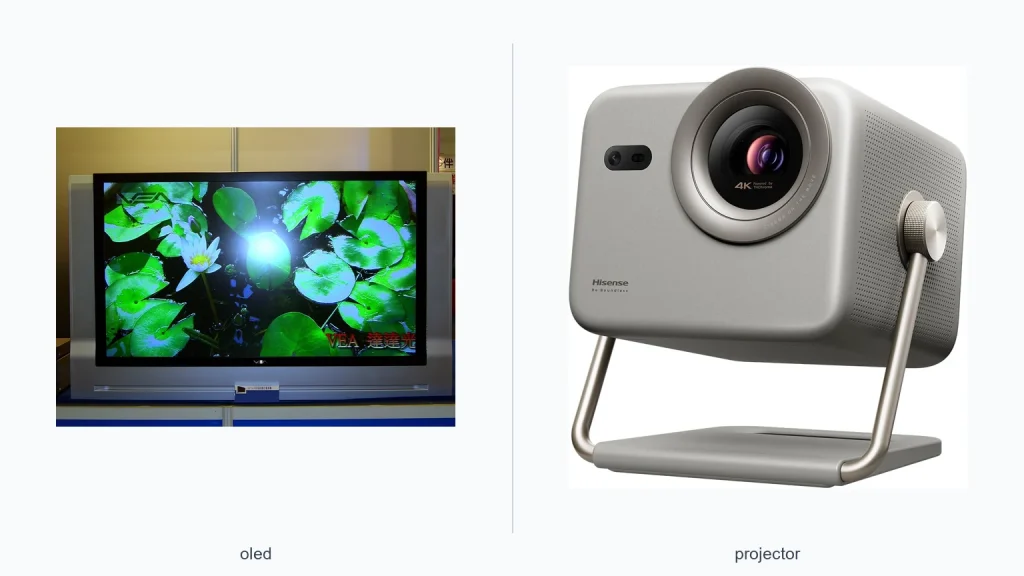
If you’re trying to decide between OLED and a projector, the right choice depends on how and where you watch. OLED vs projector is not just a question of picture quality. It’s also about room lighting, screen size, budget, setup, and how much flexibility you want. OLED usually wins for contrast, color, and everyday ease. A projector can win for sheer screen size and a more theater-like feel. This guide breaks down the tradeoffs so you can choose the better display for your space and viewing habits.
📖 Table of Contents
📌 Key Takeaways
- OLED is best for picture quality, especially in dark rooms and for movies, TV, and gaming.
- Projectors are best for huge screen sizes and a true home-theater feel, especially if you want 100 inches or more.
- Room lighting matters a lot: OLED handles bright rooms better, while projectors need control over ambient light.
- Think beyond image quality: setup, space, sound, and maintenance can matter as much as the display itself.
OLED vs Projector: The Core Difference
OLED and projectors solve the same problem in very different ways. OLED is a self-emissive display, which means each pixel creates its own light. A projector sends light onto a separate screen or wall, so the image depends heavily on the room and the projection surface.
That difference shapes almost everything else. OLED tends to deliver deeper blacks, sharper detail, and stronger contrast. A projector can deliver a much larger image, but it usually needs a darker room to look its best.
How Picture Quality Compares
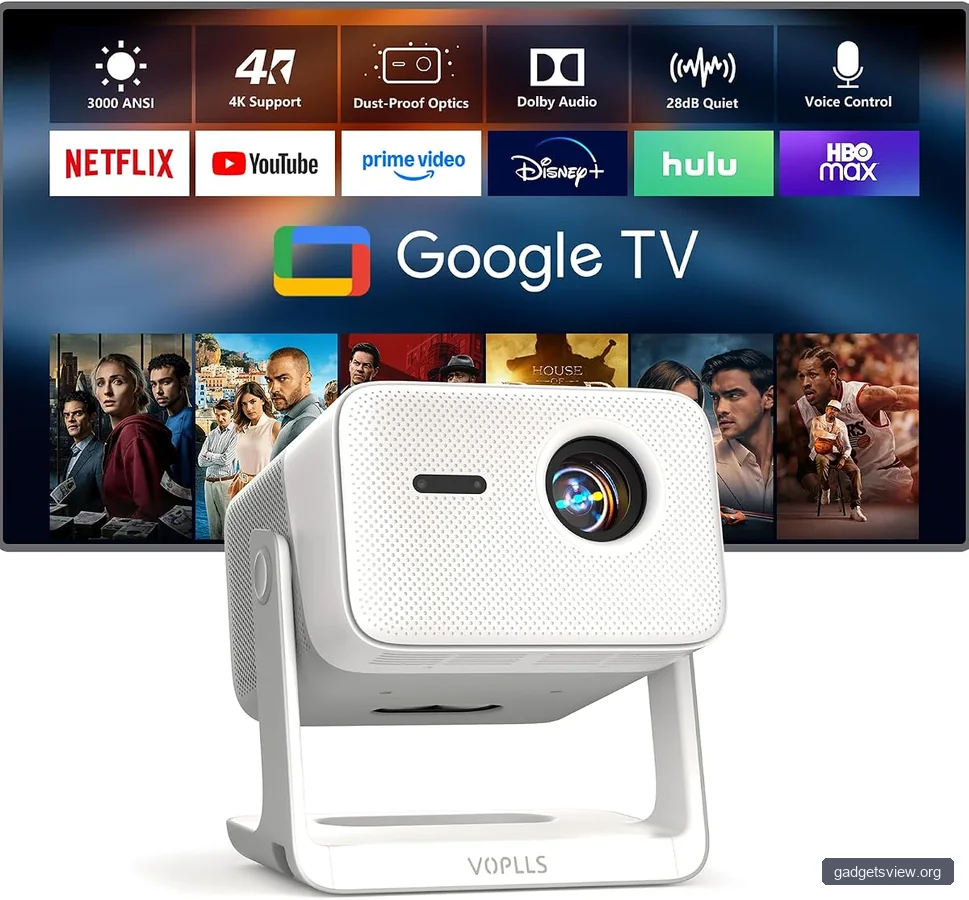
If image quality is your top concern, OLED usually has the advantage. Because each pixel can turn on or off independently, OLED can show true black levels and very strong contrast. That makes movies, dark scenes, and high-end streaming content look rich and detailed.
Projectors have improved a lot, but they still face limits. Even good projectors must fight against ambient light, screen gain, and room reflections. The result is often a softer image and less visible contrast than OLED, especially in mixed or bright lighting.
Where OLED stands out
- Deeper blacks and stronger contrast
- Sharper-looking text and fine detail
- More consistent image quality across lighting conditions
- Excellent for HDR-style viewing, when supported
Where projectors can shine
- Very large image sizes that feel cinematic
- Flexible placement for bigger viewing areas
- A theater-like experience for movies and sports
- More immersive presentation in the right room
Room Lighting and Viewing Environment
Room lighting is one of the biggest factors in the oled vs projector decision. OLED is far less sensitive to bright rooms, so it works well in living rooms, bedrooms, and spaces where lights stay on. A projector can still work in those spaces, but image quality drops as light rises.
If you plan to watch mostly during the day, OLED is usually the safer choice. If you can dim the room, use blackout shades, or build a dedicated media space, a projector becomes much more attractive. The better your light control, the better the projector performs.
| Factor | OLED | Projector |
|---|---|---|
| Bright rooms | Strong performance | Usually weaker unless the room is controlled |
| Dark rooms | Excellent | Excellent if setup is right |
| Screen size | Limited by panel size | Very large images are a major strength |
| Setup complexity | Simple | More involved |
Size, Space, and Setup: The Practical Tradeoff
Projectors are often chosen for size first. If you want an image that feels like a real theater screen, a projector can be the better fit. It can also work well in larger rooms where a standard TV might feel too small from the couch.
OLED is easier to live with. You place it, connect it, and start watching. There is no screen alignment, throw distance planning, or ongoing adjustment. For many households, that convenience matters just as much as the picture itself.
Consider these setup questions
- How much wall or floor space do you have?
- Can you control sunlight and room lights?
- Do you want a fixed setup or a flexible one?
- Will the display be used every day or only for special viewing?
Gaming, Sports, and Everyday TV Use
OLED is often the stronger all-around choice for gaming and general TV use. It is quick to use, looks great from the start, and delivers strong motion clarity for many kinds of content. For sports and fast action, OLED usually keeps the image crisp and easy to follow.
Projectors can still be a great match for sports nights or game nights, especially if the goal is a big shared viewing experience. But if you care about responsiveness, bright highlights, and daily convenience, OLED tends to be easier to recommend. It is also less dependent on a perfect room setup.
Best use cases by activity
- Movies: OLED for best contrast; projector for the biggest cinematic feel
- Gaming: OLED for speed, sharpness, and consistency
- Sports: OLED for clarity; projector for group viewing scale
- Everyday TV: OLED for simple, reliable use
Strengths, Limitations, and Who Should Choose What
The best way to decide is to match the display to your real viewing habits. If you want the best image in a normal living space, OLED is usually the smarter pick. If your goal is a giant screen and you can control the room, a projector can create a more immersive setup.
| Choice | Strengths | Limitations | Best For |
|---|---|---|---|
| OLED | Excellent contrast, strong color, simple setup, good in many rooms | Smaller maximum size, higher cost at larger sizes, less “cinema” scale | People who want the best overall picture and easy everyday use |
| Projector | Huge image, theater feel, flexible for large rooms or group viewing | Needs light control, more setup, depends on screen and room | Viewers who want maximum screen size and have a dedicated viewing space |
Choose OLED if you want the best balance of image quality, convenience, and performance in a typical home. It is the easier recommendation for most US households.
Choose a projector if you care most about screen size and can commit to the room conditions it needs. It is ideal for movie lovers who want a more traditional home-theater vibe.
How to Decide in 5 Simple Steps
If you are still unsure, use a quick decision process. This helps turn the oled vs projector choice into a practical answer instead of a spec comparison.
- Measure your room. Check how far the seats are from the screen area.
- Look at your lighting. If daylight or overhead light is common, OLED gets an advantage.
- Set your size goal. If you want very large images, projectors stand out.
- Think about setup effort. If you want simple and clean, OLED is easier.
- Match the display to your main use. Movies, games, sports, or everyday TV each point to a different best fit.
FAQ
Is OLED better than a projector for picture quality?
Usually, yes. OLED tends to deliver better black levels, stronger contrast, and a sharper-looking image. A projector can still look excellent, but it depends much more on the room and screen.
Can a projector look good in a bright room?
It can, but the image usually loses punch when ambient light is high. If your room stays bright during viewing, OLED is usually the better choice.
Which is better for a home theater?
If “home theater” means the biggest possible image and a cinematic feel, a projector is often the better fit. If it means the best overall visual quality with less setup, OLED may be the better answer.
Which is easier to set up?
OLED is much easier. A projector needs placement, alignment, and a suitable screen or wall. That extra work can be worth it, but it is still more involved.
What should I choose for mixed use: movies, sports, and gaming?
For mixed use, OLED is usually the safer all-around choice. It handles different content types well and works reliably in more room conditions.
Conclusion
The oled vs projector decision comes down to priorities. OLED is the better choice for most people because it offers stronger picture quality, simpler setup, and better performance in everyday rooms. A projector is the better choice if you want the largest screen and have the space and lighting control to support it.
If you are buying for a normal living room, start with OLED. If you are building a dedicated viewing space and want a true cinema feel, look at a projector. Either way, the best display is the one that fits your room, your habits, and the way you actually watch.