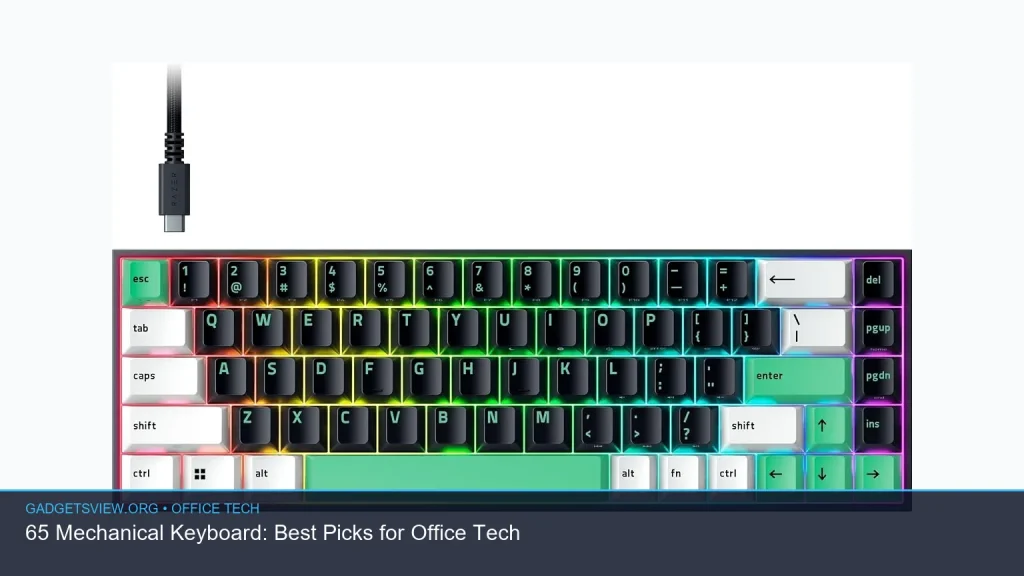
If you are comparing a 65 mechanical keyboard for office use, the sweet spot is usually clear: you get a compact layout, a more comfortable mouse position, and enough keys for daily work without the bulk of a full-size board. The best choice depends on your desk space, typing feel, wireless needs, and whether you want a simple work keyboard or a more customizable setup. Below, we break down the best options, what to look for, and which type of buyer each keyboard suits best.
📖 Table of Contents
Products mentioned
- SK68 65% Wired Gaming Keyboard, Aluminum Mechanical Keyboard
View current product details - Razer Reclusa X Mini 65% Hot-Swappable Mechanical Gaming Keyboard
View current product details - DARK ALIEN | Horizon — 65% Mechanical Gaming Keyboard, Tri-Mode Wireless, Hot-Swap RGB, Gasket Mount, Bluetooth/2.4GHz/USB-C, 4000mAh Battery, a Brand by Twakle
View current product details - Geeky GK65 SE 65% | Mechanical Gaming Keyboard | 68 Keys Multi Color RGB LED Backlit for PC/Mac Gamer | ANSI US American Layout (Black, Mechanical Speed Silver)
View current product details - BOYI GMK67 Barebones Keyboard Kit,VIA Programmable Custom BT5.0/2.4GHz/Type-C Tri-Mode Gasket Mounted Hot Swap RGB 4000mAh Wireless 65% Mechanical Gaming Keyboa
View current product details - AULA S75 PRO Wireless Mechanical Gaming Keyboard with Screen&Knob, 80 Keys
View current product details
Availability, specifications, and prices can change; verify them on the product page.
📌 Key Takeaways
- A 65 mechanical keyboard is a strong office pick if you want a small footprint without losing the arrow keys.
- If you need more function keys and a familiar layout, a 75 mechanical keyboard may fit better than a 65% board.
- Wireless buyers should look for a 75 wireless mechanical keyboard or 65% tri-mode model with Bluetooth, 2.4GHz, and USB-C support.
- For the smallest desks, a 60 mechanical keyboard saves even more space, but it usually asks you to rely more on shortcuts.
Why a 65 Mechanical Keyboard Works So Well for Office Tech
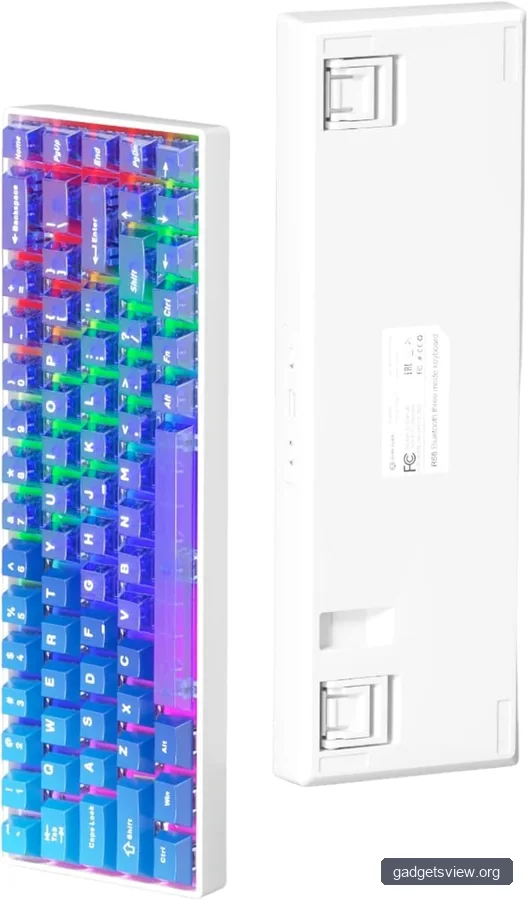
A 65% board trims away the numpad and many extra navigation keys, but keeps the arrows and a compact cluster of useful keys. That makes it a smart middle ground for office users who want a smaller desk footprint without going as minimal as a 60% board.
For many people, the biggest benefit is posture and workspace flow. A smaller keyboard lets the mouse sit closer to your body, which can reduce shoulder reach and make long work sessions feel less cramped.
This layout also works well for shared desks, hybrid work setups, and home offices where every inch matters. If you spend most of your day in email, spreadsheets, documents, chat apps, and browser tabs, a 65% board is often enough.
Best Picks to Consider for Office Use
The market is full of gaming-branded models, but several of them can still make sense in an office if you value compact design and customization. The listings below are useful discovery signals, but you should still confirm current specs before buying.
| Model | Best For | Why It Stands Out | Watch For |
|---|---|---|---|
| SK68 65% Wired Gaming Keyboard | Simple wired office setup | Compact, aluminum build suggests a more solid feel | Wired-only use may limit flexibility |
| Razer Reclusa X Mini 65% Hot-Swappable Mechanical Gaming Keyboard | Users who want easy switch changes | Hot-swap design can make future tweaks easier | Check the exact switch and software support details |
| DARK ALIEN Horizon 65% Mechanical Gaming Keyboard | Wireless office-plus-gaming hybrid buyers | Tri-mode wireless, hot-swap, gasket mount, RGB, 4000mAh battery are listed features | Confirm software, battery life, and noise profile before purchase |
| Geeky GK65 SE 65% Mechanical Gaming Keyboard | ANSI US layout users | US layout and backlighting can suit shared office use | Verify switch type and device compatibility |
| BOYI GMK67 Barebones Keyboard Kit | Custom builders | VIA programmable, tri-mode, gasket mount, hot-swap, 4000mAh listed | Barebones kit means you still need switches and keycaps |
1) SK68 65% Wired Gaming Keyboard
The SK68 is a straightforward option for office buyers who want a compact board without adding wireless complexity. The aluminum mention in the listing suggests a more premium-feeling shell than basic plastic models, which may matter if you type all day.
This kind of wired 65% board is best for a desktop that stays in one place. If you want a no-fuss keyboard for work apps, a wired model can be a practical choice.
2) Razer Reclusa X Mini 65% Hot-Swappable Mechanical Gaming Keyboard
A hot-swappable 65% keyboard is attractive if you care about long-term flexibility. It lets you change switches later without soldering, which can be useful if you want a quieter feel for office use or a firmer feel for typing.
For commercial buyers, this is a good “buy once, adjust later” path. Still, verify compatibility, software support, and the exact switch specifications before making a decision.
3) DARK ALIEN Horizon 65% Mechanical Gaming Keyboard
This model stands out because the listing combines several buyer-friendly features: tri-mode wireless, hot-swap support, RGB, gasket mount construction, Bluetooth, 2.4GHz, USB-C, and a 4000mAh battery. That mix is appealing for people who split time between a laptop, desktop, and sometimes a tablet.
For office tech, the biggest draw is flexibility. If your workspace changes often, a wireless 65% board can reduce cable clutter and make your desk look cleaner.
4) Geeky GK65 SE 65% Mechanical Gaming Keyboard
The Geeky GK65 SE listing includes an ANSI US American layout, which is important for US users who do not want to adapt to an unusual key arrangement. That alone can make daily typing easier and reduce mistakes.
It also mentions multicolor RGB backlighting, which may help in low-light setups, though office users may prefer subtle lighting over bright effects. As always, confirm the actual switch feel and software behavior before purchasing.
5) BOYI GMK67 Barebones Keyboard Kit
This is the most customizable option on the list. A barebones kit is ideal if you already know the sound and feel you want, or if you enjoy building a keyboard tailored to your work habits.
Because it is a kit, you must factor in switches and keycaps separately. That makes it better for enthusiasts than for buyers who want a ready-to-use office keyboard out of the box.
How to Choose the Right Keyboard for Your Office Setup
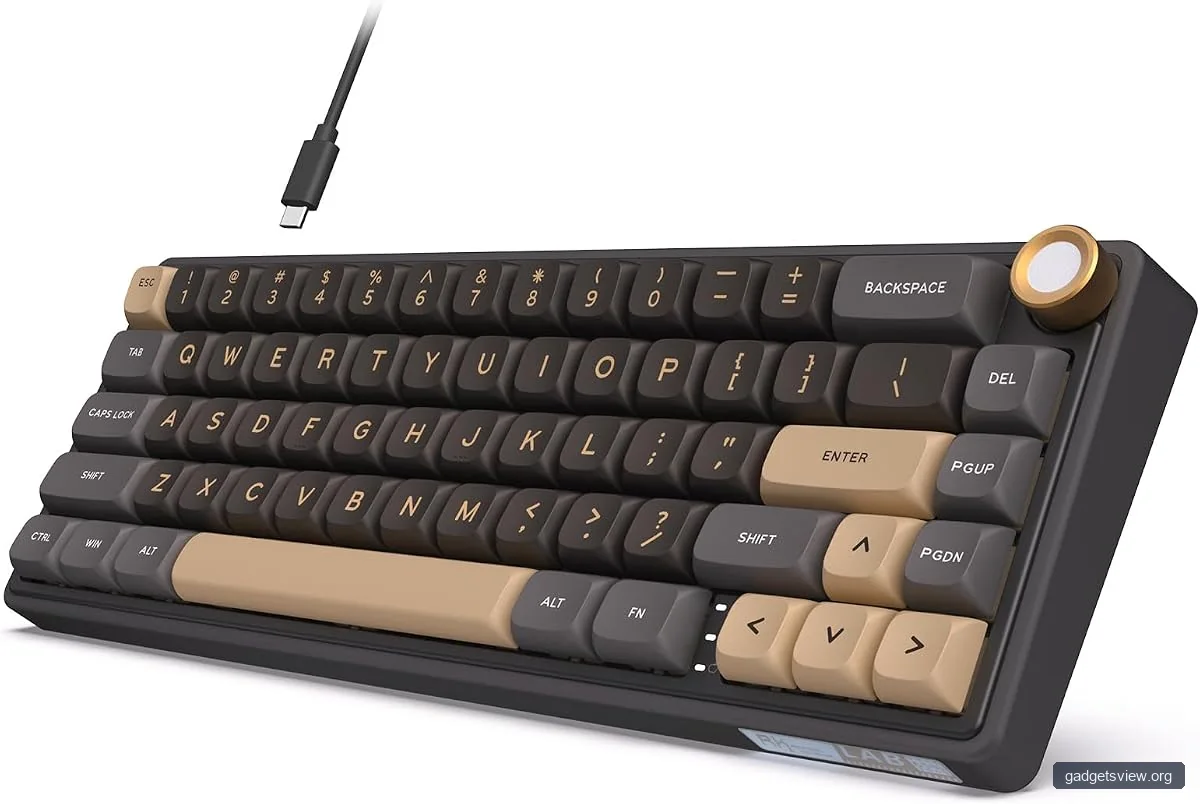
The best keyboard is not just about size. You should weigh comfort, device compatibility, noise, and whether you want a simple work tool or a custom project.
| What to Compare | Why It Matters | Office-Friendly Choice |
|---|---|---|
| Layout size | Affects desk space and shortcut use | 65% for balance, 75% for more keys, 60% for max compactness |
| Connectivity | Determines cable clutter and device switching | Tri-mode wireless if you use multiple devices |
| Switch type | Affects sound, feel, and fatigue | Linear or quiet tactile switches for office use |
| Hot-swap support | Makes future upgrades easier | Helpful if you want quieter typing later |
| Build style | Changes typing feel and sound | Gasket mount can feel softer and less harsh |
65% vs 75% vs 60%: Which Layout Fits You?
A 75 mechanical keyboard is the best pick if you want a compact board but still want function keys and a more familiar layout. It is a strong choice for spreadsheet users, analysts, and anyone who leans on F-keys or navigation keys often.
A 60 mechanical keyboard is even smaller and can be great for minimal desks or travel. The tradeoff is that you will rely more on layers and shortcuts, which is not ideal for every office user.
A 65 mechanical keyboard sits between those two. It is usually the easiest compact layout to live with if you want a small board but still need arrow keys and a practical everyday workflow.
Strengths, Limitations, and Who Should Choose What
Here is the clearest way to narrow down your decision.
- Choose a wired 65% board if you want reliability, fewer batteries to manage, and a simple desk setup.
- Choose a tri-mode wireless 65% board if you switch between laptop, desktop, and tablet and want a cleaner workspace.
- Choose a 75% keyboard if you need more keys and use function row shortcuts often.
- Choose a 60% keyboard if desk space is extremely limited and you are comfortable with shortcuts.
- Choose a barebones kit if you want full control over sound, feel, and keycap style.
Strengths of a 65% keyboard: it saves space, keeps arrow keys, and works well for many office tasks. It is a safe middle choice for users who want less clutter without a steep learning curve.
Limitations: you may miss dedicated function keys, and some office tasks become slower if you depend on the numpad or lots of navigation shortcuts. If that sounds like you, a 75 wireless mechanical keyboard may be the better commercial buy.
Buying Tips Before You Click Add to Cart
Before you choose a model, check a few details carefully. These small checks can save you from getting a keyboard that feels wrong for office work.
- Confirm layout language and region. US buyers should look for ANSI US layout if that is what they are used to.
- Check the noise level. Loud switches may not be ideal in shared offices or Zoom-heavy environments.
- Look for hot-swap support. This gives you room to fine-tune the board later.
- Match the connection to your workflow. Wired works well for one desk, while wireless helps multi-device users.
- Review software needs. If you want remapping or macros, verify that the keyboard supports them on your platform.
If you work in a quiet office, a keyboard with a softer mount and calmer switches may be worth more than flashy RGB. If you split time between work and home, multi-device wireless support can be the feature that matters most.
FAQ
Is a 65 mechanical keyboard good for office work?
Yes. A 65 mechanical keyboard is often a strong office choice because it saves space while still keeping arrow keys and a practical typing layout. It is especially good if you want a cleaner desk and do not rely heavily on the numpad.
Should I get a 75 mechanical keyboard instead?
Choose a 75 mechanical keyboard if you want more keys and a layout that feels closer to a standard board. It is often better for users who want extra navigation keys, function row access, or a smoother transition from full-size keyboards.
What is the advantage of a 60 mechanical keyboard?
A 60 mechanical keyboard is the most compact option of the three common sizes here. It is great for very small desks or travel, but it usually requires more shortcut use and may feel less convenient for office tasks.
Is a 75 wireless mechanical keyboard worth it for work?
Yes, if you want more keys and wireless flexibility. A 75 wireless mechanical keyboard can be a smart compromise for office tech buyers who want both a fuller layout and a cleaner desk with fewer cables.
Do I need hot-swap support in an office keyboard?
You do not need it, but it is helpful. Hot-swap support makes it easier to change switches later if you want a quieter or lighter typing feel without replacing the entire keyboard.
Conclusion
If you want a compact keyboard that still feels practical at work, a 65 mechanical keyboard is one of the best office-tech choices you can make. It balances size, comfort, and ease of use better than most ultra-compact layouts.
For most buyers, the decision comes down to workflow: choose 65% for balance, 75% for more keys, and 60% for maximum compactness. Before buying, verify the latest specs, layout, and software support so the keyboard fits your actual office needs.