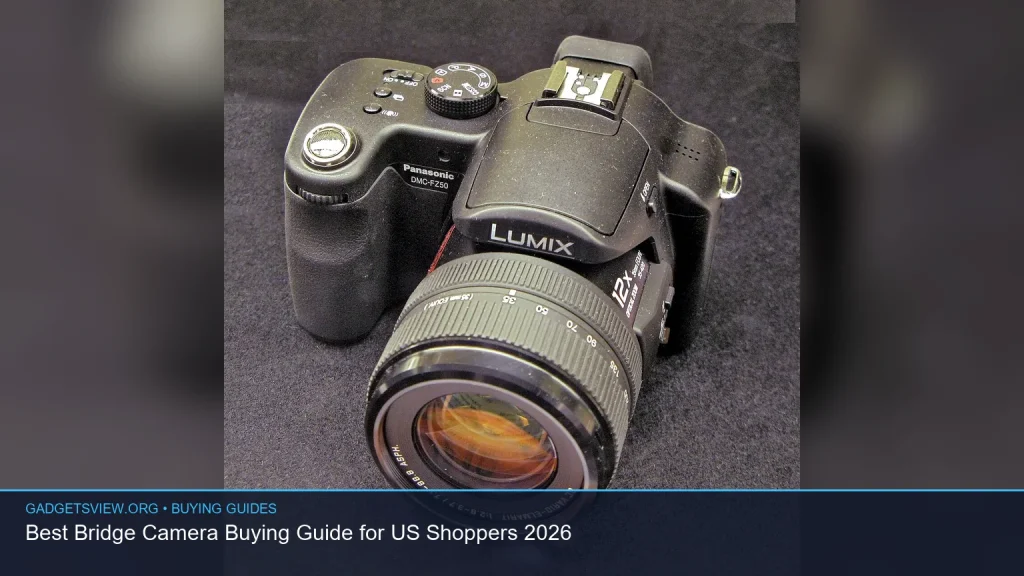
If you are shopping for the best bridge camera, the right choice comes down to zoom reach, image quality, video needs, and how much weight you want to carry. Bridge cameras sit between point-and-shoots and interchangeable-lens systems, so they can be a smart pick for travel, wildlife, family events, and casual content creation. This guide explains what to look for, who a bridge camera suits best, and how to compare it with mirrorless options before you buy.
📖 Table of Contents
- What a Bridge Camera Is and Why It Still Matters
- How to Choose the Best Bridge Camera for Your Needs
- Bridge Camera vs Mirrorless: Which One Fits Better?
- Key Features That Matter Most in 2026
- Strengths, Limitations, and Best Use Cases
- How to Compare Models Before You Buy
- FAQ
- Final Verdict: Who Should Buy a Bridge Camera?
📌 Key Takeaways
- A bridge camera is best for shoppers who want long zoom reach without swapping lenses.
- Look closely at sensor size, zoom range, autofocus speed, and viewfinder quality, not just megapixels.
- If you need the smallest body or the best low-light results, a compact or budget mirrorless camera may be a better fit.
- The right choice depends on your main use: travel, wildlife, family photos, video, or all-around convenience.
What a Bridge Camera Is and Why It Still Matters
A bridge camera is built to bridge the gap between simple compact cameras and more advanced interchangeable-lens models. It usually has a fixed lens with a very large zoom range, a DSLR-style body, and manual controls for users who want more than a phone can offer. For many US shoppers, that mix makes it one of the easiest ways to get flexible framing without carrying extra lenses.
Bridge cameras still matter because convenience is a real feature. If you want to shoot a child on stage, a bird across the yard, and a landscape on vacation, the zoom range can make life simpler. That said, the convenience comes with trade-offs, especially in low light and in image quality compared with larger-sensor cameras.
How to Choose the Best Bridge Camera for Your Needs

Start with your real use case. A camera for sports and wildlife needs fast autofocus and strong zoom; a camera for family trips may need better image stabilization, good battery life, and simple controls. The best bridge camera for you is the one that fits how you actually shoot, not the one with the biggest zoom number on the box.
Here are the main buying criteria to compare:
- Zoom range: Longer zoom gives more reach for travel, birds, and distant subjects.
- Sensor size: Bigger sensors often handle low light better and can improve detail.
- Autofocus: Fast, accurate focusing matters for kids, pets, action, and wildlife.
- Image stabilization: Helps keep shots sharper at long zoom lengths.
- Viewfinder and screen: A clear EVF and tilting screen make framing easier outdoors.
- Video features: Check resolution, mic support, and autofocus behavior if you shoot video.
- Ergonomics: Grip, button layout, and menu clarity affect daily use more than many buyers expect.
Also think about how much control you want. Some bridge cameras are friendly for beginners, while others are better for users who want manual exposure, raw files, and more creative control. If you are a US shopper comparing systems, it can help to decide whether you want a one-camera solution or a path that can grow later.
Bridge Camera vs Mirrorless: Which One Fits Better?
This is where many shoppers narrow the field. A bridge camera is simpler and more self-contained, while a mirrorless system can deliver better image quality and more upgrade options. If you want a close, all-in-one comparison, think of bridge cameras as convenience-first and mirrorless cameras as flexibility-first.
| Category | Bridge Camera | Mirrorless Camera |
|---|---|---|
| Zoom flexibility | Usually excellent with one built-in lens | Depends on the lens you buy |
| Image quality | Good, but often limited by sensor size | Often stronger, especially in low light |
| Convenience | Very easy to carry and use | More setup, more gear, more decisions |
| Upgrade path | Limited | Strong, with many lens choices |
| Best for | Travel, family, zoo, casual wildlife | Enthusiasts, creators, low-light shooters |
Who should choose what: choose a bridge camera if you want one do-everything camera with strong zoom and little hassle. Choose mirrorless if you care more about image quality, lens choice, and long-term flexibility. If you are comparing the best mirrorless camera 2025 or looking for the best compact mirrorless camera, you are probably already prioritizing sensor quality and portability over zoom convenience.
Key Features That Matter Most in 2026

For 2026 shopping, the features that matter most are the ones that affect real use, not just spec-sheet bragging rights. A good bridge camera should feel fast enough to use, easy enough to trust, and capable enough to deliver dependable results across different lighting conditions. That is especially important if you plan to use it for trips, school events, or outdoor subjects.
1. Sensor and image quality
Sensor size is one of the biggest limits on bridge cameras. Smaller sensors can still produce nice photos in good light, but they may show more noise and less detail in dim rooms or at higher ISO settings. If low-light shots matter a lot, you may want to compare with the best budget mirrorless camera options instead.
2. Zoom range and stabilization
The main appeal of a bridge camera is reach. A long zoom helps you frame distant subjects without moving closer, which is useful for wildlife, sports, and travel landmarks. Good stabilization is just as important, because long zoom shots are more likely to blur from hand shake.
3. Autofocus and burst shooting
Autofocus speed can make or break the experience. If the camera hunts for focus or misses moving subjects often, the large zoom range loses some of its value. For kids, pets, and action scenes, look for responsive subject tracking and a burst mode that helps you catch the best moment.
4. Video and content creation
Many shoppers now want a camera for both photos and video. Check whether the camera offers clean footage, useful stabilization, microphone support, and easy exposure control. If you want a simple travel camera plus decent video, a bridge model can work well, but creators who want more control may prefer a mirrorless setup.
Strengths, Limitations, and Best Use Cases
Every camera type has trade-offs, and bridge cameras are no exception. Their biggest strength is clear: one body, one built-in lens, and huge flexibility in framing. Their biggest limitation is equally clear: they rarely match the best interchangeable-lens cameras in low light, subject isolation, or future expandability.
| Buyer Priority | Best Fit | Why |
|---|---|---|
| All-in-one convenience | Bridge camera | Built-in zoom keeps travel simple |
| Best low-light quality | Mirrorless camera | Larger sensors usually perform better |
| Smallest carry | Compact mirrorless camera | Smaller than many bridge bodies, with strong quality |
| Lowest learning curve | Bridge camera | Simpler than swapping lenses and managing kits |
Strengths: zoom convenience, travel-friendly setup, easy operation, and a broad reach for distant subjects. Limitations: smaller sensors, limited lens flexibility, and weaker performance in poor light compared with many mirrorless models. That is why the best choice depends so heavily on where and how you shoot.
How to Compare Models Before You Buy
Because no product list is provided here, the safest approach is to use a decision process instead of chasing model names. Start by ranking your top three needs, then compare only the cameras that meet those needs. This keeps you from overpaying for features you will not use.
- Choose your main use: travel, wildlife, family events, video, or general everyday use.
- Set your must-haves: zoom reach, viewfinder, stabilization, or 4K video.
- Check real handling: look for a comfortable grip and clear controls.
- Read recent reviews: especially for autofocus, battery life, and menu design.
- Compare against mirrorless alternatives: if image quality or low light matters more than zoom.
- Verify current details: models, firmware, and feature availability can change over time.
If you find yourself asking whether a bridge camera is “good enough,” the answer usually depends on your priorities. For most casual users, the trade-off is worth it when zoom range and ease of use matter most. For more advanced users, a compact or budget mirrorless body may be the smarter long-term buy.
FAQ
Is a bridge camera better than a phone camera?
Often, yes, especially when you need zoom reach or better control. A phone can be great for quick snapshots, but a bridge camera usually gives you more framing flexibility and a better handling experience. The gap is biggest when you shoot distant subjects.
What is the best bridge camera for travel?
The best travel bridge camera is one that balances zoom, size, stabilization, and battery life. Look for a model that is easy to carry all day and simple to use when scenes change fast. If you want an even smaller kit, a best compact mirrorless camera option may suit travel better.
Should I buy a bridge camera or a mirrorless camera?
Buy a bridge camera if you want an all-in-one zoom camera with fewer accessories. Buy mirrorless if you want better image quality, stronger low-light performance, or the option to change lenses later. Many buyers comparing the best budget mirrorless camera models eventually choose mirrorless once they know they want room to grow.
Are bridge cameras still worth it in 2026?
Yes, if you value convenience and zoom more than system flexibility. They remain practical for travelers, casual wildlife shooters, and families who want a simple camera that can do a lot. Just compare them carefully against the latest mirrorless options before buying.
What should I check before buying online?
Check the current model year, return policy, included accessories, battery type, and firmware support. Because specs and availability can shift, verify details on the seller page and the manufacturer site before you order. That is especially useful when comparing any best mirrorless camera 2025 models against current bridge cameras.
Final Verdict: Who Should Buy a Bridge Camera?
The best bridge camera is the one that gives you the most useful zoom, reliable handling, and enough image quality for the way you shoot. If you want a camera that is simple, versatile, and ready for distant subjects without lens changes, a bridge model is still a strong choice. If your priority is maximum image quality or the smallest possible body, a mirrorless camera may be the better buy.
Next, list your top three needs, compare bridge cameras against a couple of mirrorless alternatives, and verify the latest model details before you purchase. That way, you will choose the camera that fits your budget, your travel style, and your shooting habits with confidence.