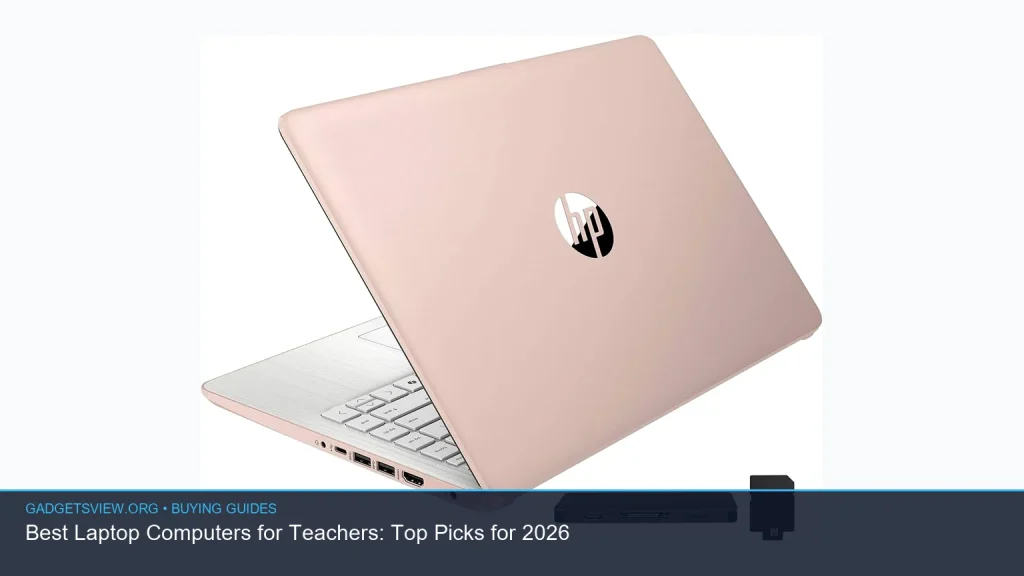
If you’re shopping for the best laptop computers for teachers, focus on speed, battery life, portability, and easy file sharing—not flashy specs. Teachers need a laptop that can handle lesson plans, video calls, grading tools, cloud apps, and classroom management without slowing down. This guide breaks down the most useful laptop types for educators in 2026, plus the features that matter most so you can choose with confidence.
📖 Table of Contents
- What Teachers Need Most in a Laptop
- Best Laptop Computers for Teachers: The Top Types to Consider
- How to Judge Performance Without Overbuying
- Why the Right Design Can Matter More Than Raw Specs
- Accessories That Make a Teacher Laptop Work Better
- Recommended Teacher Use Cases and Best Fit
- Potential Trade-Offs Before You Buy
- FAQ About the Best Laptop Computers for Teachers
- Final Verdict: Which Laptop Should Teachers Buy in 2026?
Products mentioned
- Mount-It! Mobile Computer Cart with Monitor Mount for Screen up to 32″, Portable Desk on Wheels, Rolling Laptop Stand Teachers, Office, Classroom, Rise up to 53
View current product details - Laptop Tote Bag for Women, Leather Work Tote Office Computer Bags
View current product details - Bagstellar Teacher Tote Bag for Women, 15.6″ Laptop Work Tote Computer Bag
View current product details - LOVEVOOK Laptop Tote Bag for Women Work, Teacher Tote Bag with Large Cup Holder, Waterproof Leather Computer Bag
View current product details - HP Stream 14″ Laptop with AI Copilot, Flagship for Students & Business, 13th Gen Intel 4-Core, 4GB RAM, 1.12TB Storage (128GB UFS + 1TB Docking Station), Office
View current product details - LOVEVOOK Teacher Tote Bag for Women Work, Laptop Bag With Large Cup Holder, Nurse Bags Professional Briefcase Business Computer Purses Bible Handbag Gifts, Blac
View current product details
Availability, specifications, and prices can change; verify them on the product page.
📌 Key Takeaways
- Choose by workflow first: teaching style, apps, and mobility matter more than brand names.
- For most teachers, the sweet spot is a thin, light laptop with all-day battery life, a bright screen, and enough memory for multitasking.
- Chromebooks can work well for cloud-first teachers, while Windows laptops offer more flexibility for school software.
- Accessories matter too: a reliable bag or mobile cart can improve how you use and transport your laptop every day.
What Teachers Need Most in a Laptop
The best laptop computers for teachers should be easy to carry, quick to wake, and dependable during a full school day. A strong choice should handle email, slides, documents, gradebooks, video lessons, and browser tabs at the same time without lag.
Battery life is especially important for teachers who move between classrooms, meetings, and after-school tasks. A comfortable keyboard and a clear display also matter because many teachers spend hours typing feedback, planning lessons, or running live presentations.
Selection criteria that actually matter
- Portability: light enough to carry daily, but not so small that typing feels cramped.
- Battery life: enough power for a full day of teaching and planning.
- Performance: smooth multitasking for browser tabs, video meetings, and office apps.
- Screen quality: a bright, readable display for long lesson prep sessions.
- Ports and connectivity: useful connections for projectors, drives, headsets, and docking setups.
- Durability: a design that can handle regular travel and classroom use.
Best Laptop Computers for Teachers: The Top Types to Consider
Because teaching needs vary, the “best” laptop is often the one that fits your workload. Below is a practical comparison of the most useful laptop categories for educators in 2026.
| Laptop Type | Best For | Strengths | Limitations |
|---|---|---|---|
| Chromebook | Cloud-based teaching, Google Workspace, basic daily tasks | Simple, fast boot, often affordable, easy to manage | Less ideal for specialized desktop software |
| Windows ultrabook | Most teachers, mixed school software, multitasking | Flexible, widely compatible, good for office and school tools | Can cost more at higher configurations |
| 2-in-1 laptop | Interactive lessons, note-taking, presentations | Tablet mode, stylus support, flexible classroom use | Often pricier than standard laptops |
| Budget laptop | Light workloads, backup use, substitute teachers | Lower upfront cost, basic tasks covered | May feel slower over time, weaker screens or battery |
Who should choose what
- Choose a Chromebook if your school uses Google Classroom, Docs, Sheets, and web apps almost exclusively.
- Choose a Windows ultrabook if you want the safest all-around pick for school portals, grading tools, Zoom, and local software.
- Choose a 2-in-1 if you want to annotate, present, or switch between laptop and tablet modes.
- Choose a budget laptop only if your daily workload is light and you can accept slower performance.
How to Judge Performance Without Overbuying
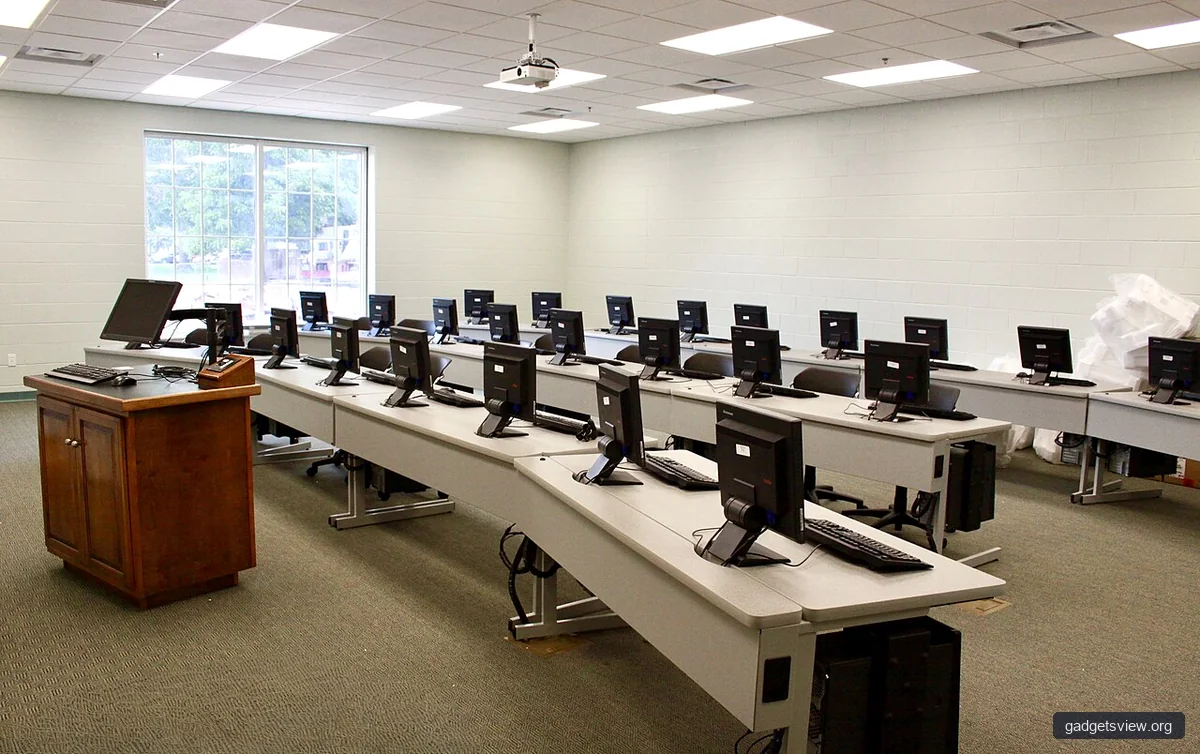
Teachers do not need a heavy workstation for most classroom work. In many cases, a responsive laptop with enough memory and storage will feel better than a powerful machine that is bulky and hard to carry.
For a smooth experience, prioritize fast startup, enough RAM for many tabs, and storage that keeps files from piling up. If you store large videos, slide decks, or classroom resources locally, you may want more room than a basic entry-level machine offers.
Simple performance checklist
- For everyday teaching: web browsing, Docs, email, and streaming lessons should run smoothly.
- For video calls: look for a laptop that can handle conferencing while other apps stay open.
- For multitasking: choose enough memory so switching between apps feels quick.
- For long-term use: avoid specs that are too minimal if you expect the laptop to last several school years.
If you are comparing models in stores or online, verify the current memory, storage, and processor details on the product page. Listings can change, and older configurations may not match newer ones.
Why the Right Design Can Matter More Than Raw Specs
Teachers use laptops in hallways, classrooms, offices, libraries, and at home. That means weight, keyboard feel, and screen size can make a bigger difference than a small performance bump.
A larger screen may be nice for grading and planning, but a lighter machine can be easier to carry all day. The best balance depends on whether you work mostly at a desk or move around campus often.
Useful design features for educators
- Lightweight build: easier to carry between classes and meetings.
- Comfortable keyboard: helpful for lesson planning, comments, and emails.
- Good webcam and microphone: useful for remote parent meetings and virtual classes.
- Plenty of ports: valuable for projectors, USB drives, and accessories.
- Bright display: easier to read in classrooms with different lighting.
Accessories That Make a Teacher Laptop Work Better
A laptop alone is only part of the setup. Many teachers benefit from accessories that make their device easier to transport, store, and use throughout the day.
During research, several related products appeared that fit common teacher needs. These are not substitutes for a laptop, but they can improve how one is used in a real classroom setting.
- Mount-It! Mobile Computer Cart with Monitor Mount: useful for classroom setups where a rolling workstation or shared screen station makes sense.
- LOVEVOOK Laptop Tote Bag for Women Work and Bagstellar Teacher Tote Bag for Women: practical carry options if you want a bag that fits a laptop and daily essentials.
- Laptop Tote Bag for Women, Leather Work Tote Office Computer Bags: a more polished option for commuting or professional settings.
- LOVEVOOK Teacher Tote Bag for Women Work: another teacher-friendly carry option for daily transport.
If you travel between buildings or bring your laptop home every night, a good bag is not a luxury. It helps protect the device, organize chargers and files, and reduce stress during the school day.
Recommended Teacher Use Cases and Best Fit
Instead of chasing the single “best” model, think in terms of teaching style. That is the easiest way to avoid overpaying for features you will not use.
| Teaching Need | Best Laptop Choice | Why It Fits |
|---|---|---|
| Mostly Google Workspace | Chromebook | Fast, simple, and built for cloud tools |
| Mixed school software and office apps | Windows ultrabook | Broad compatibility and everyday flexibility |
| Interactive teaching and annotation | 2-in-1 laptop | Tablet mode and touch features help in class |
| Basic work on a tighter budget | Entry-level budget laptop | Covers essentials without excess cost |
Potential Trade-Offs Before You Buy
Every teacher laptop involves trade-offs. A smaller, lighter model may be easier to carry, but it may also have fewer ports or a tighter keyboard. A larger machine can be more comfortable for grading, but it may not feel as portable.
Budget models can be tempting, but they may age faster if your workload grows. If you plan to keep the laptop for several years, it is often wiser to choose a bit more headroom than you think you need today.
Common limitations to watch for
- Low storage: can fill up fast if you save many files locally.
- Small screens: may slow down grading and planning sessions.
- Weak battery: creates stress during long school days.
- Limited ports: may require extra adapters for classroom use.
FAQ About the Best Laptop Computers for Teachers
Q: Is a Chromebook enough for most teachers?
A: Yes, if your work is mostly browser-based and your school uses Google tools. If you need specialized desktop software, a Windows laptop is usually safer.
Q: Should teachers get a laptop or a 2-in-1?
A: A 2-in-1 makes sense if you want touch input, annotation, or tablet mode for presentations and note-taking. If you only need standard productivity, a regular laptop is often simpler and more affordable.
Q: How important is battery life for teachers?
A: Very important. A laptop that lasts through classes, meetings, and planning time is easier to live with than one that needs frequent charging.
Q: What matters more, processor speed or memory?
A: For teachers, memory often has the bigger everyday impact because it helps when many browser tabs and apps are open. That said, both should be balanced for smooth use.
Q: Do I need a premium laptop for teaching?
A: Not always. Many teachers can do well with a midrange model that has good battery life, solid build quality, and enough memory. The key is matching the laptop to your actual workload.
Final Verdict: Which Laptop Should Teachers Buy in 2026?
The best laptop computers for teachers are the ones that make daily work easier, not more complicated. For most educators, a lightweight Windows ultrabook is the safest all-around choice, while a Chromebook is a strong option for cloud-first classrooms.
If you want more flexible classroom interaction, a 2-in-1 can be worth the extra cost. Before you buy, compare your school software needs, transport habits, and battery expectations, then pair the laptop with a good bag or cart if your day is highly mobile.
Next step: make a short list of your must-have apps, check compatibility, and then choose the lightest, most reliable model that meets those needs without unnecessary extras.