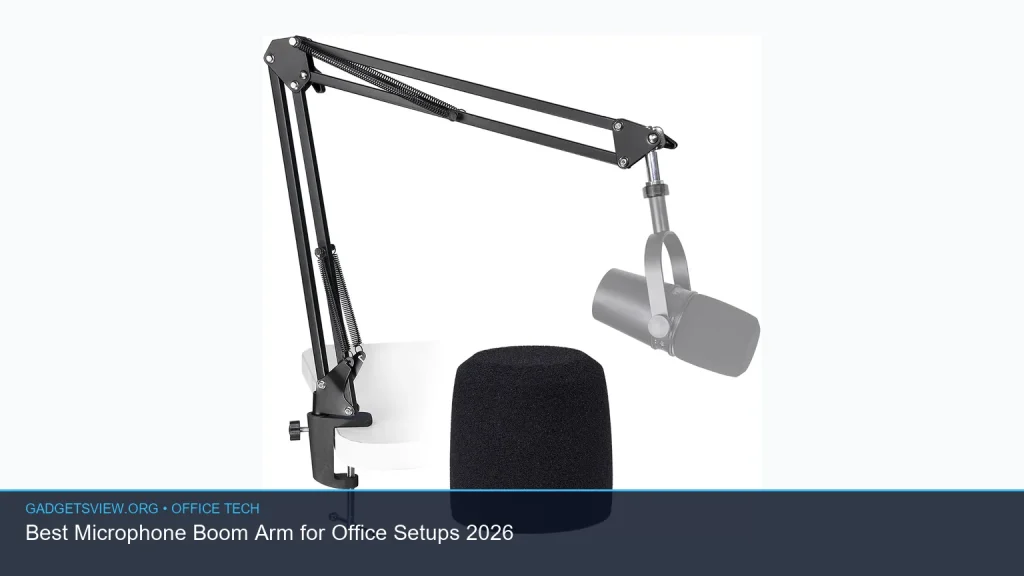
If you need a microphone boom arm for an office setup in 2026, the best choice is the one that fits your desk, mic weight, and daily workflow. A good arm keeps your desk clear, brings the mic close to your mouth, and cuts down on handling noise. For most office users, the smartest pick is a stable, adjustable boom arm with solid cable management. If you want a low-profile look, stream-style positioning, or easy setup with popular USB mics, a few specific models stand out. This guide helps you choose the right one fast.
📖 Table of Contents
- What Makes a Good Microphone Boom Arm for Office Use?
- Best Microphone Boom Arm Styles for Different Office Setups
- Top Office-Ready Microphone Boom Arm Options to Consider
- How to Match the Boom Arm to Your Office Workflow
- Microphone Boom Arm vs Desktop Stand vs Boundary Microphone
- Common Mistakes to Avoid Before You Buy
- FAQ: Best Microphone Boom Arm for Office Setups
- Conclusion: The Smartest Way to Choose in 2026
Products mentioned
- SUNMON Mic Arm for Microphone, Boom Arm for Fifine AM8 with Cable Sleeve
View current product details - InnoGear Boom Arm Microphone Mic Stand for Blue Yeti Fifine HyperX, Black
View current product details - InnoGear Mic Arm Microphone Boom Arm Cable Management for Blue Yeti, Black
View current product details - InnoGear Mic Arm Low Profile Microphone Boom Arm Mic Stand 360° Flex, Black
View current product details - Gaming USB Microphone, Noise Cancellation Condenser Mic with Mute,Boom Arm Mic-Reverb Adjustment, Monitoring for Streaming, Podcasting, Discord, YouTube,PC, Com
View current product details
Availability, specifications, and prices can change; verify them on the product page.
📌 Key Takeaways
- A microphone boom arm is best for office setups when you want better mic placement, less desk clutter, and more comfort during long calls.
- Choose a model based on desk space, mounting style, mic weight, and whether you need cable management or a low-profile arm.
- For common USB mics like the Blue Yeti, Fifine models, and HyperX mics, products such as InnoGear and SUNMON boom arms are relevant options to compare.
- If you only need a simple voice pickup setup, a boom microphone arm is usually a better fit than a desktop stand or a boundary microphone.
What Makes a Good Microphone Boom Arm for Office Use?
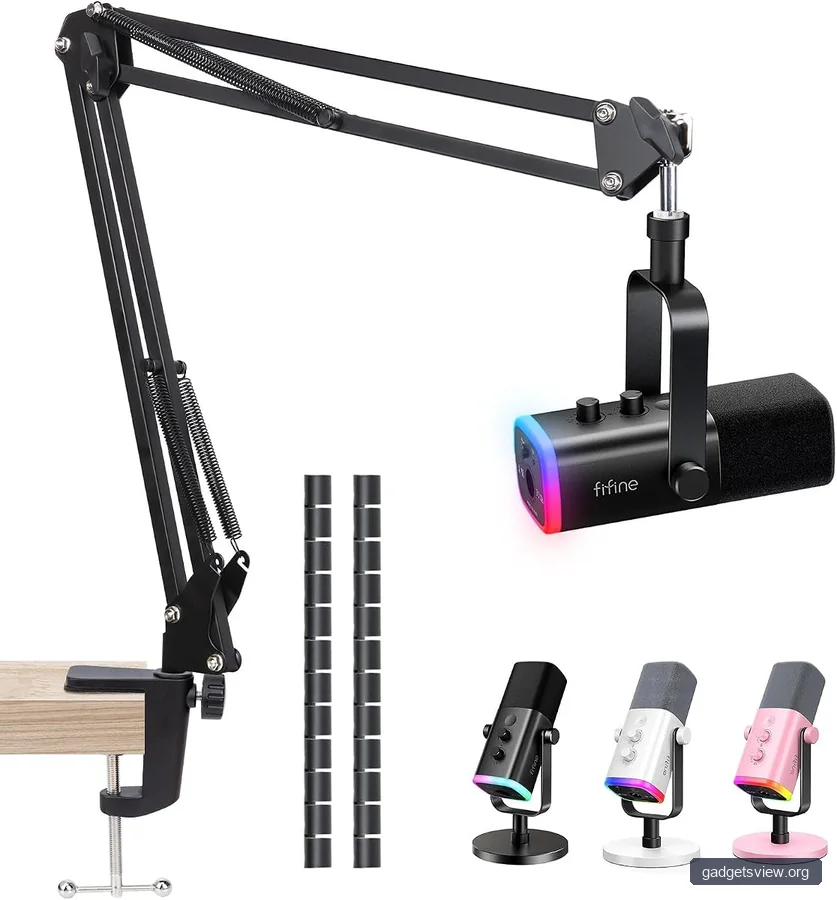
The best office boom arm should do three things well: hold your mic securely, move easily, and stay out of the way. In an office, that matters more than flashy design. You want something that supports clear speech for meetings, training calls, podcasts, and content work without crowding your desk.
Look for smooth adjustability, strong joints, and a mount that fits your desk thickness. Cable routing also matters because hanging cords can snag and make your setup look messy. If you move your mic often, a stable arm with easy swing range is worth more than a decorative design.
Core selection criteria
- Desk compatibility: Check clamp fit and whether the mount works with thick or thin desks.
- Mic support: Make sure the arm can handle your microphone’s size and weight.
- Reach and positioning: The arm should place the mic near your mouth without blocking your monitor.
- Cable management: Built-in sleeves or clips help keep the office neat.
- Low profile or standard arm: Choose based on whether you want the mic visible, tucked away, or centered in front of you.
Best Microphone Boom Arm Styles for Different Office Setups
Not every office desk has the same shape or layout. Some setups need a full swing arm that reaches across a wide desk. Others work better with a low-profile boom arm that sits closer to the desk line and keeps the mic out of view on video calls.
If you use a boom microphone for daily meetings, your goal should be comfort and consistency. The right style depends on how often you move the mic and how much desk space you can spare.
| Boom Arm Style | Best For | Strengths | Limitations |
|---|---|---|---|
| Standard boom arm | General office, home office, meetings | Flexible positioning, easy access, broad compatibility | Can take up visual space on camera |
| Low-profile boom arm | Video calls, compact desks, neat setups | Sits lower, keeps sightlines open, looks cleaner | May need careful placement to avoid monitor obstruction |
| Boom arm with cable sleeve | Clean office builds, hybrid workstations | Reduces clutter, looks more polished | Adds a little setup time |
Who should choose what: choose a standard arm if you want the safest all-around option. Choose a low-profile arm if your desk is tight or your camera is always on. Choose a cable-managed model if appearance matters and cords would distract on screen.
Top Office-Ready Microphone Boom Arm Options to Consider
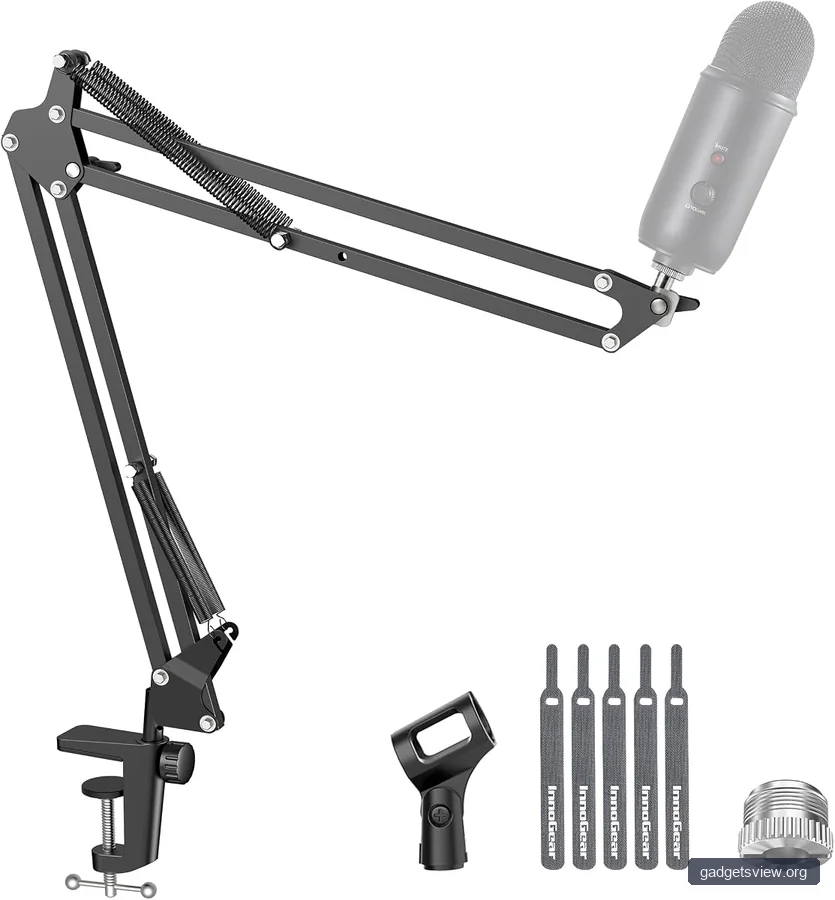
The product titles found during research point to a few relevant options that fit common office needs. These are not all direct substitutes, but they help narrow the field based on desk style and microphone type. Use them as a practical shortlist rather than a final verdict on performance.
For buyers using popular USB microphones, the InnoGear and SUNMON listings are especially relevant. They appear designed around everyday office and creator setups, including models such as Blue Yeti, Fifine, HyperX, and similar desktop mics.
| Product Listing | Likely Best Use | What It Suggests | Watch For |
|---|---|---|---|
| SUNMON Mic Arm for Microphone, Boom Arm for Fifine AM8 with Cable Sleeve | Fifine AM8 users who want cleaner cable routing | A matched-fit option with a cable sleeve | Verify compatibility with your exact mic and desk layout |
| InnoGear Boom Arm Microphone Mic Stand for Blue Yeti Fifine HyperX, Black | Common USB mic owners | Broad compatibility focus | Check if your mic mount adapter is included or needed |
| InnoGear Mic Arm Microphone Boom Arm Cable Management for Blue Yeti, Black | Neat office setups where cable routing matters | Cable management emphasis | Make sure the arm reaches your preferred speaking position |
| InnoGear Mic Arm Low Profile Microphone Boom Arm Mic Stand 360° Flex, Black | Compact or camera-facing desks | Low-profile layout with flexible movement | Confirm monitor clearance before buying |
| Gaming USB Microphone, Noise Cancellation Condenser Mic with Mute, Boom Arm Mic-Reverb Adjustment, Monitoring | All-in-one starter setups | Includes microphone and arm in one package | Check whether the arm quality matches your long-term office needs |
Strengths of the leading options
- InnoGear options: Good for users who want familiar support for mainstream USB mics.
- SUNMON option: Strong fit if you use the Fifine AM8 and want a cleaner desk look.
- Low-profile InnoGear arm: Useful when you need a lower visual profile on camera.
- All-in-one mic and arm bundle: Convenient if you are starting from scratch.
Limitations to keep in mind
- Product titles do not prove every performance claim, so verify mounting details before purchase.
- Compatibility can vary by microphone body shape, not just brand.
- A bundle may be convenient, but a separate arm can offer better long-term flexibility.
How to Match the Boom Arm to Your Office Workflow
The best microphone boom arm is the one that fits how you work, not just what you record. If you spend most of your day in meetings, pick an arm that moves quickly and stays put. If you also create video or audio content, choose one with tighter joint control and better positioning range.
Think about how often you mute, swing, or reposition the mic. A boom microphone that reaches smoothly to mouth level can improve comfort and make your setup feel more professional. It also helps reduce the temptation to hunch forward or move closer to the screen.
- Measure your desk first. Check desk depth, thickness, and the space behind your monitor.
- Confirm your microphone type. USB mics often need different mounts or adapters than XLR mics.
- Decide on visibility. Choose low-profile if the mic should stay off-camera.
- Plan cable routing. Use a sleeve or clip system if your desk looks cluttered easily.
- Balance reach and stiffness. You want easy movement without sagging.
Microphone Boom Arm vs Desktop Stand vs Boundary Microphone
If you are comparing office audio options, it helps to know what each tool does best. A desktop stand keeps the mic near you, but it uses desk space and can pick up more vibrations. A boom arm lifts the microphone off the desk and gives you better placement control.
A boundary microphone is different. It is usually placed on a flat surface and can capture sound from a wider area, which may help in meeting rooms or shared spaces. For a single user at a desk, a boundary microphone is usually less precise than a well-placed microphone boom arm.
| Option | Best For | Office Fit |
|---|---|---|
| Microphone boom arm | One-person desks, remote work, creators | Best overall for control and desk space |
| Desktop mic stand | Temporary setups, low-budget use | Simple, but less tidy and less flexible |
| Boundary microphone | Conference tables, group meetings | Useful for groups, not ideal for solo desk use |
Common Mistakes to Avoid Before You Buy
Many buyers focus only on price or brand name and miss the details that matter in real office use. The most common issue is buying an arm that cannot comfortably hold the mic in the spot you need. Another common mistake is ignoring desk thickness, which can make the clamp useless.
Also avoid choosing a boom arm without checking your microphone mount style. Some mics need adapters or shock mounts, and some all-in-one bundles are not as flexible as they seem. If you work in a shared office, think about movement range too, so the arm does not interfere with monitors, lamps, or a laptop dock.
- Do not assume all USB mics fit every arm without adjustment.
- Do not overlook how far the arm extends over your desk.
- Do not buy a low-profile model if your monitor sits very high and space is tight.
- Do not ignore cable routing if you want a polished office setup.
FAQ: Best Microphone Boom Arm for Office Setups
What is the best microphone boom arm for a home office?
The best choice is usually a stable, adjustable arm with good cable management and broad mic compatibility. For many users, an InnoGear-style boom arm or a SUNMON arm matched to a specific mic is a practical office pick. The right answer depends on your desk depth, microphone weight, and whether you want a low-profile look.
Is a boom microphone better than a desktop stand for meetings?
Yes, usually. A boom microphone arm lets you place the mic closer to your mouth while keeping the desk clear. That often gives you a cleaner and more comfortable meeting setup than a small desktop stand.
Should I buy a low-profile boom arm or a standard arm?
Choose a low-profile boom arm if you want a cleaner camera view or have a compact desk. Choose a standard arm if you want the most flexible positioning. For many office users, the best pick is the one that keeps the mic near mouth level without blocking the monitor.
Do I need a boundary microphone instead of a boom arm?
Usually no, unless you are setting up a conference table or shared room. A boundary microphone is better for group pickup across a flat surface. For solo office use, a microphone boom arm is generally the more precise and flexible option.
What should I verify before buying a microphone boom arm?
Check desk thickness, mount type, mic compatibility, reach, and cable routing. If you use a heavier microphone, confirm that the arm can hold it securely. If you are unsure, review the manufacturer’s current specs before ordering.
Conclusion: The Smartest Way to Choose in 2026
The best microphone boom arm for office setups in 2026 is the one that fits your desk, your mic, and your daily routine. If you want the safest all-around choice, go with a stable standard arm. If you want a cleaner look on camera, choose a low-profile model. If your priority is less clutter, look for cable management built in.
Start by matching the arm to your microphone and desk layout, then narrow your shortlist to the models that support your workspace best. For most office buyers, that simple filter is enough to choose well the first time.