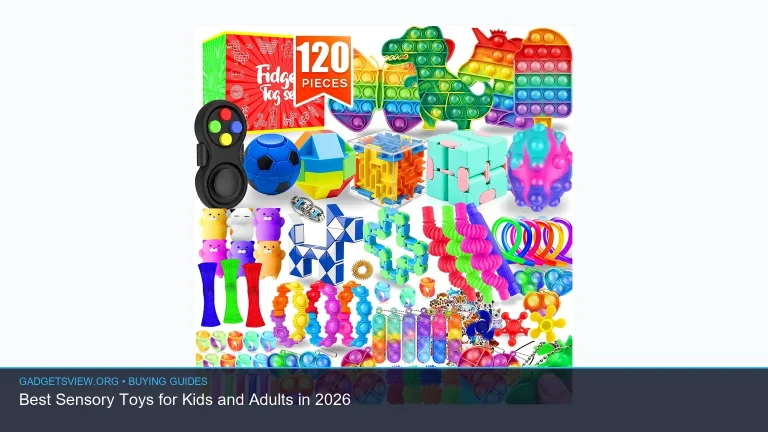
If you’re looking for the best fidgets for kids, the right choice depends on age, safety, and how your child likes to play. Some kids need quiet desk-friendly fidget toys for kids, while others do best with hands-on tactile sensory toys that keep fingers busy without creating a mess. This guide breaks down what to look for, which types make sense for different kids, and how to choose safe, durable options in 2026. The goal is simple: help you buy a fun, useful stim toy that fits your child’s needs and your budget.
📖 Table of Contents
- What Makes a Good Fidget for Kids?
- Best Types of Fidget Toys for Kids by Need
- How to Choose Safe Fidgets for Kids
- Best Fidgets for Kids by Age and Use Case
- What to Avoid When Buying Fidget Toys for Kids
- How to Make a Smart Purchase in 2026
- FAQ About Fidgets for Kids
- Conclusion: Choosing the Right Fidget
📌 Key Takeaways
- Choose fidgets for kids based on age, choking risk, noise level, and how strong or gentle the motion should be.
- The best fidget toys for kids are simple, durable, easy to clean, and matched to the setting, such as home, school, or travel.
- Tactile sensory toys can be helpful for focus and calming, but they should not distract other children or create safety issues.
- When in doubt, pick one or two well-made stim toys instead of a large bundle of cheap pieces with mixed quality.
What Makes a Good Fidget for Kids?
The best fidgets for kids are not the flashiest ones. They are the ones a child can use safely, comfortably, and without frustration. A good fidget should feel satisfying in the hand, hold up to repeated use, and match the child’s attention needs without becoming a toy that takes over the room.
Start with age. Small parts are a concern for younger children, so any item with beads, magnets, or detachable pieces needs extra care. For older kids, the better choice is often a simple tool with one clear action, like squeezing, twisting, flipping, or rolling.
What to look for first
- Safety: Avoid loose parts for younger children and check for sturdy construction.
- Noise level: Quiet options are better for classrooms and shared spaces.
- Texture: Some kids like soft, smooth, bumpy, or stretchy surfaces.
- Durability: Good fidgets should handle repeated handling without cracking or leaking.
- Ease of cleaning: Washable or wipeable materials are a plus for daily use.
If your child has sensory preferences, tactile sensory toys may be a better fit than visual gadgets. Some children want resistance and pressure. Others prefer motion or a repeating click. The best choice is usually the one your child returns to on their own.
Best Types of Fidget Toys for Kids by Need
There is no single best option for every child. Different fidgets support different habits, settings, and sensory needs. The right pick often depends on whether you want something quiet, portable, soothing, or highly engaging.
| Fidget Type | Best For | Strengths | Limitations |
|---|---|---|---|
| Pop-style fidgets | Quiet-ish sensory play and hand focus | Simple, easy to understand, usually portable | Can get boring if the action is too repetitive |
| Squeeze and stretch toys | Stress relief and tactile input | Soft feel, often calming, good for short breaks | May tear, leak, or wear out faster |
| Twist and link toys | Kids who like motion and manipulation | Strong hand engagement, often compact | Some designs can be noisy or feel stiff |
| Desk-friendly stim toys | Schoolwork, homework, meetings | Low distraction, easy to keep nearby | Not all schools allow them |
| Visual motion toys | Kids who respond to movement | Can be engaging and soothing | May be less discreet and easier to break |
Who should choose what: if your child needs a quiet school option, pick a low-noise desk fidget. If they seek sensory input, choose a textured squeeze or stretch toy. If they love movement in their hands, go with a twist, flip, or link-style toy. For younger children, the safest option is usually the simplest one.
How to Choose Safe Fidgets for Kids
Safety matters more than novelty. Many fidgets for kids look harmless, but features like magnets, tiny pieces, sharp seams, and weak glue can turn a playful item into a problem. Always match the toy to the child’s age and supervision level.
Look closely at material quality. Soft plastics should not feel brittle, and stretchy items should not leave residue or smell strongly of chemicals. If a toy is meant to be held often, it should not shed, crack, or come apart under regular use.
Simple safety checklist
- Check the recommended age range and use it seriously.
- Look for any small parts that could detach during play.
- Avoid magnetic pieces for younger children unless the product is clearly age-appropriate and closely supervised.
- Make sure the item is easy to inspect for wear and tear.
- Choose non-toxic, wipe-clean materials when possible.
For school use, it also helps to think about rules and environment. Some classrooms welcome quiet fidget toys for kids, while others prefer only specific items. A safe toy can still be the wrong fit if it distracts classmates or creates a sharing issue.
Best Fidgets for Kids by Age and Use Case
Age is one of the biggest factors in choosing the right stim toy. Younger children need larger pieces and simpler actions. Older kids usually want something more subtle, more portable, or more durable for school and travel.
Preschool and early elementary
For younger kids, go with large, simple tactile sensory toys that do one job well. Soft squeeze items, chunky pop-style pieces, and larger textured objects are usually better than complex gadgets. The best choice is easy to grip and hard to lose.
Upper elementary and middle school
Older kids often want fidgets that feel less childish and more discreet. Quiet click-free options, small twist toys, and smooth tactile tools can work well in class or during homework. At this age, a good design can matter as much as the sensory feel.
Travel and on-the-go use
For cars, waiting rooms, and trips, portability matters most. Choose something that fits in a pocket or small bag and will not spill, stick, or make too much noise. If your child gets restless during long outings, a compact fidget can help keep hands busy without needing a screen.
Home and downtime
At home, you can choose slightly larger or more interactive fidgets for kids. These may be better for winding down after school, managing transitions, or giving hands something to do while listening to music or reading. Home use also makes cleanup and storage easier.
What to Avoid When Buying Fidget Toys for Kids
Not every trendy item is a good buy. Some fidget toys for kids are built more for novelty than long-term use, and they can become frustrating quickly. Cheap bundles often look convenient, but they may include items that break fast or do not suit your child at all.
Avoid toys that are too loud for the intended setting. A noisy clicker may be fine at home and a problem at school. Also avoid anything sticky, messy, or difficult to clean if your child will use it regularly.
Common buying mistakes
- Buying too many at once instead of testing one or two first.
- Choosing a toy based only on looks, not feel or function.
- Ignoring age guidance or choking warnings.
- Picking a toy that is fun for 30 seconds but not useful day to day.
- Assuming all sensory toys are suitable for every child.
If you are shopping for a child with specific sensory needs, it may help to compare a few types before buying. A child who likes pressure may prefer squeeze toys, while a child who seeks motion may like a twist or flip design. Small differences in texture can make a big difference in whether the toy gets used.
How to Make a Smart Purchase in 2026
Because product quality changes over time, current verification still matters. Before you buy, check the latest age guidance, material details, and safety notes from the seller or manufacturer. If a listing is vague, that is usually a warning sign.
It also helps to think in terms of use case. Ask where the fidget will live most of the time: backpack, classroom, car, or home. That answer will quickly narrow your options and prevent impulse buys that do not fit real life.
| Need | Best Choice Type | Why It Fits |
|---|---|---|
| Quiet classroom use | Low-noise desk-friendly fidget | Less distracting and easier to use during lessons |
| Sensory input at home | Textured squeeze or tactile sensory toy | More satisfying touch and pressure |
| Travel and waiting | Compact stim toy | Portable and easy to store |
| Younger child safety | Large, simple, one-piece fidget | Lower risk and easier to supervise |
FAQ About Fidgets for Kids
Are fidgets for kids good for focus?
They can be, especially for children who concentrate better when their hands are busy. The best results usually come from simple, low-distraction fidgets that do not compete with listening or reading. Not every child needs one, and some may find them distracting instead.
What are the safest fidget toys for kids?
The safest options are usually simple, durable, and large enough to avoid choking risk. Look for one-piece designs or items with securely attached parts, especially for younger children. Always follow the age label and inspect toys for wear.
Are tactile sensory toys the same as stim toys?
They overlap, but they are not exactly the same. Tactile sensory toys focus on touch and texture, while stim toys can include movement, sound, pressure, or visual feedback. Many fidgets for kids fit both categories.
How many fidgets should a child have?
Usually just one or a few is enough. Too many choices can become distracting and make it harder to pick the right tool for the moment. A small rotation often works better than a large pile.
Can kids use fidget toys in school?
Sometimes, yes, but school rules vary. Many teachers allow quiet fidgets for kids if they stay in the child’s hands and do not distract others. It is best to check classroom policy before sending one to school.
Conclusion: Choosing the Right Fidget
The best fidgets for kids are the ones that are safe, age-appropriate, and useful in real life. Focus on simple design, sturdy materials, and the setting where the toy will be used most. If you want the smartest buy, start with one quiet, durable option and see how your child responds before adding more.
For 2026, the winning strategy is still the same: choose function over gimmicks, safety over novelty, and the right sensory feel over flashy extras. That approach makes it much easier to find fidget toys for kids that truly earn a place in daily routines.