

Smart Cable Tie Zip Buying Guide 2026
May 21, 2026
[FEATURED_IMAGE_PLACEGOER]
Cable tie zips—commonly known as zip ties—are one of those humble yet indispensable tools that quietly power modern life. From organizing tangled cords behind your TV to securing wiring in industrial machinery, these simple plastic fasteners have evolved far beyond their basic origins. In 2026, the market for cable tie zips is more diverse and technologically advanced than ever, offering solutions tailored to everything from home DIY projects to aerospace applications. Yet, with such variety comes confusion: How do you choose the right one? What makes one zip tie better than another? And why should you care about tensile strength or UV resistance when all you want is to bundle a few USB cables?
This comprehensive buying guide is designed to cut through the noise and help you make smart, informed decisions. Whether you’re a weekend warrior tidying up your garage, an IT professional managing server racks, or an engineer specifying components for outdoor installations, understanding what sets high-quality cable tie zips apart will save you time, money, and frustration. You’ll learn how to evaluate key performance metrics, avoid common pitfalls, compare different types, and ultimately select the best product for your specific needs—without overspending or underperforming.
The global cable tie market has seen steady growth, driven by increasing demand in construction, automotive, telecommunications, and consumer electronics. Innovations in materials—like nylon 6/6, stainless steel, and even biodegradable options—have expanded functionality, while ergonomic designs and reusable variants cater to sustainability-conscious users. With so many choices available online and in stores, it’s easy to grab the cheapest pack without considering long-term reliability. But as we’ll explore, that short-term savings can lead to long-term headaches. This guide equips you with expert-level knowledge to navigate the landscape confidently and choose cable tie zips that truly deliver.

What to Look for When Buying Cable Tie Zips
1. Tensile Strength & Load Capacity
Tensile strength refers to the maximum force a zip tie can withstand before breaking—typically measured in pounds (lbs) or kilograms (kg). This is arguably the most critical specification, especially for heavy-duty applications. Standard consumer-grade zip ties usually range from 18 lbs to 50 lbs, while industrial-grade versions can exceed 175 lbs. For example, if you’re bundling thick electrical conduits or supporting outdoor lighting fixtures, opting for a 120+ lb tensile strength tie is essential. Always check the manufacturer’s rated pull strength, not just the “working load,” which is often lower and safer for real-world use.
2. Material Composition
Nylon is the dominant material due to its flexibility, durability, and cost-effectiveness. However, not all nylons are equal. Nylon 6/6 offers superior heat resistance (up to 185°F continuous exposure) and better chemical resistance compared to generic nylon blends. For outdoor or high-temperature environments, look for UV-stabilized or weather-resistant formulations. Stainless steel cable ties are ideal for extreme conditions—such as marine or industrial settings—where corrosion resistance is non-negotiable. Meanwhile, newer eco-friendly options made from plant-based polymers are gaining traction among environmentally conscious buyers, though they may sacrifice some durability.
3. Size & Length Options
Cable tie zips come in a wide range of lengths—from tiny 4-inch ties perfect for earbud cords to massive 36-inch giants used in construction. Width also matters: narrower ties (e.g., 0.1 inches) suit delicate electronics, while wider ones (0.3 inches or more) provide greater grip and strength. Always measure the bundle diameter you intend to secure and add at least 2–3 inches for the head and tail. Keep in mind that longer ties aren’t always stronger; structural design and material quality play bigger roles. A well-stocked toolkit should include multiple sizes to handle various scenarios.
4. Head Design & Locking Mechanism
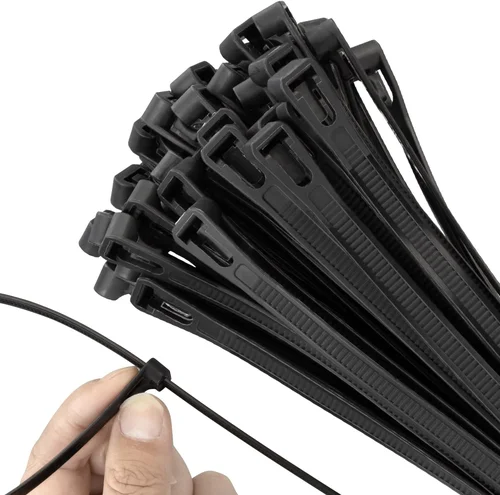
The locking mechanism determines how securely the tie holds under tension. Traditional ratchet-style heads are reliable but can be difficult to release once tightened. Reusable or releasable zip ties feature a push-button or lever that allows adjustment or removal—ideal for temporary setups or frequent reconfigurations. Some premium models include anti-vibration locks or double-ratchet systems that prevent slippage in high-movement environments like vehicles or machinery. Inspect the head for smooth engagement and a firm “click” sound when cinched—a sign of quality engineering.
5. Environmental Resistance
If your zip ties will face sunlight, moisture, extreme temperatures, or chemicals, environmental resistance becomes crucial. UV-resistant ties won’t become brittle or fade after months outdoors. Flame-retardant variants (often rated UL94 V-2 or higher) are mandatory in electrical enclosures or data centers. For food-safe or medical applications, look for FDA-compliant materials. Always verify certifications like RoHS, REACH, or IP ratings if used in sealed or hazardous environments. Ignoring these factors can lead to premature failure—and potential safety risks.
6. Ease of Use & Ergonomics
A seemingly minor detail, ease of use significantly impacts efficiency, especially during large-scale installations. Look for smooth edges to prevent hand fatigue, tapered tails for easier insertion, and color-coded sizes for quick identification. Some brands include built-in dispensers or pre-cut bundles for rapid deployment. For professionals, ergonomic tension tools can reduce strain and ensure consistent tightness. Even for home users, a tie that’s easy to thread and tighten makes repetitive tasks far less tedious.
7. Brand Reputation & Certification
Not all zip ties are created equal—even if they look identical. Reputable brands like Panduit, HellermannTyton, and Velcro Industries undergo rigorous testing and adhere to international standards (e.g., ISO, ASTM). Cheaper generics may skimp on material purity or dimensional accuracy, leading to inconsistent performance. Check for third-party certifications and read verified buyer reviews focusing on real-world durability. A trusted brand might cost slightly more upfront but pays dividends in reliability and peace of mind.
8. Reusability & Sustainability
Single-use plastic zip ties contribute to waste, prompting demand for reusable alternatives. Reusable cable ties—often made with metal buckles or durable silicone—can be loosened and retightened hundreds of times. While pricier initially, they’re cost-effective over time and align with green initiatives. Some companies now offer take-back programs or compostable options. Consider your usage pattern: if you frequently reconfigure cables (e.g., in event staging or tech labs), reusable ties are a smart investment.
Different Types of Cable Tie Zips

Common Buying Mistakes to Avoid
❌ Mistake: Choosing Based Solely on Price
Why it’s bad: The cheapest zip ties often use inferior nylon that becomes brittle, stretches under load, or snaps unexpectedly. This leads to rework, damaged equipment, or safety hazards.
What to do instead: Balance cost with intended use. Invest in mid-tier or premium ties for critical applications—even a 10-cent difference per tie adds up to significant long-term savings in reliability.
❌ Mistake: Ignoring Environmental Conditions
Why it’s bad: Standard nylon degrades quickly in direct sunlight or high humidity. Using indoor ties outdoors can result in crumbling within weeks.
What to do instead: Always match the tie’s environmental specs to your deployment area. Look for UV-stabilized or marine-grade labels for outdoor use.
❌ Mistake: Over-Tightening
Why it’s bad: Excessive force can crush delicate wires, strip insulation, or weaken the tie’s own structure, leading to premature failure.
What to do instead: Use a tensioning tool with adjustable torque settings, or hand-tighten just enough to secure without deforming the bundle.
❌ Mistake: Buying Only One Size
Why it’s bad: A single size forces compromises—too loose for small bundles, too tight (and wasteful) for large ones.
What to do instead: Purchase assortments with 4–8 inch, 8–12 inch, and 12+ inch options. Many kits include a mix of lengths and colors for versatility.
❌ Mistake: Disregarding Certification Marks
Why it’s bad: Uncertified ties may not meet electrical or fire safety standards, risking code violations or insurance issues in commercial settings.
What to do instead: Verify UL, CE, or RoHS markings—especially for use in buildings, vehicles, or medical devices.
❌ Mistake: Assuming All “Reusable” Ties Are Equal
Why it’s bad: Some reusable ties have flimsy mechanisms that fail after a few cycles, defeating the purpose.
What to do instead: Read reviews focusing on cycle life and choose models with metal buckles or reinforced hinges for longevity.
Budget Guidelines: How Much Should You Spend?
- Entry-Level ($0.02–$0.08 per tie): Ideal for occasional home use—bundling charger cables, organizing kitchen cords, or light DIY projects. Expect basic nylon with moderate tensile strength (18–40 lbs). Brands like AmazonBasics or generic multipacks work fine here, but avoid for anything mission-critical.
- Mid-Range ($0.10–$0.25 per tie): The sweet spot for most users. These offer nylon 6/6 construction, better UV resistance, and consistent quality. Perfect for garage workshops, home theaters, or small business IT setups. Kits from brands like Gardner Bender or Black+Decker provide excellent value.
- Premium ($0.30–$1.00 per tie): Designed for professionals and demanding environments. Features include high tensile strength (100+ lbs), flame retardancy, precise tolerances, and ergonomic designs. Reusable and color-coded variants fall here. Worth the investment for contractors, engineers, or frequent users.
- Luxury ($1.00+ per tie): Reserved for extreme conditions—stainless steel ties for offshore rigs, aerospace-grade fasteners, or custom-molded industrial solutions. Only necessary for specialized applications where failure is not an option.
Expert Tips for Getting the Best Deal
- Shop During Back-to-School or Black Friday: Major retailers and online platforms often discount cable management kits during seasonal sales. Stock up when prices dip.
- Compare Unit Pricing: A 100-pack for $5 sounds great—until you realize it’s $0.08 per tie vs. a 500-pack at $0.06. Always calculate cost per unit.
- Check Manufacturer Direct: Brands like HellermannTyton sometimes offer better warranties or exclusive bundles through their websites.
- Read the Fine Print on “Eco-Friendly” Claims: Some “biodegradable” ties require industrial composting facilities—not backyard bins—to break down.
- Test Before Committing: If possible, buy a small sample pack first. Try threading, tightening, and (if reusable) releasing to assess feel and function.
- Prioritize Return Policies: Ensure the seller accepts returns if the ties don’t meet specs—especially important for bulk orders.
- Look for Multi-Purpose Kits: Sets that include zip ties, mounts, and cutters offer better value than buying components separately.

Frequently Asked Questions
Q: Can I reuse regular zip ties?
A: Technically yes, but not easily. Once tightened, standard ties lock permanently. You’d need to cut them off, which defeats reusability. For repeated use, invest in releasable models with unlock mechanisms.
Q: Are metal zip ties safe near electrical wires?
A: Only if properly insulated. Bare stainless steel can conduct electricity or cause shorts. Use coated metal ties or ensure adequate clearance from live circuits. When in doubt, stick with non-conductive nylon.
Q: How do I remove a zip tie without cutting it?
A: For releasable ties, press the locking tab with a flathead screwdriver or your fingernail. For standard ties, you’ll need wire cutters—but be careful not to nick nearby cables.
Q: Do colored zip ties affect performance?
A: Generally no—color is added via dye and doesn’t weaken the material. However, some pigments may slightly reduce UV resistance, so check specs if used outdoors.
Q: What’s the difference between “natural” and “black” nylon ties?
A: Natural (off-white) ties are standard nylon. Black ties usually contain carbon black, which enhances UV resistance—making them better for outdoor use.
Q: Can zip ties be used in food areas?
A: Only if labeled FDA-compliant. Standard ties may leach chemicals when exposed to heat or grease. Always verify material safety data sheets (MSDS) for commercial kitchens.
Q: How tight should I cinch a zip tie?
A: Tight enough to hold the bundle firmly without indenting or damaging cables. A good rule: you shouldn’t be able to slide a finger underneath, but the bundle shouldn’t be compressed.
Q: Are there fireproof zip ties?
A: Yes—look for UL94 V-0 or V-2 ratings. These self-extinguish within seconds of flame removal and are required in many electrical enclosures.
Our Final Recommendations
- Best for Budget-Conscious Buyers: AmazonBasics 100-Pack Assorted Nylon Zip Ties – Reliable for everyday tasks, great value, and widely available.
- Best Overall Value: Gardner Bender 8-Inch UV-Resistant Ties – Durable nylon 6/6, excellent tensile strength, and ideal for indoor/outdoor hybrid use.
- Best Premium Option: HellermannTyton T18R Reusable Cable Ties – Professional-grade, easy-release mechanism, and built to last thousands of cycles.
- Best for Beginners: Velcro One-Wrap Thin Ties (Reusable) – No sharp edges, simple to adjust, and perfect for learning cable management basics.
- Best for Advanced Users: Panduit PLT2S-M0 Heavy-Duty Ties – 120-lb tensile strength, UL listed, and precision-engineered for industrial reliability.
Conclusion: Making the Right Choice
Choosing the right cable tie zip isn’t just about tidiness—it’s about safety, efficiency, and long-term performance. As we’ve explored, factors like tensile strength, material quality, environmental resistance, and reusability can make or break your project’s success. While it’s tempting to grab the cheapest option on the shelf, thoughtful selection based on your specific needs will pay off in durability, reduced waste, and fewer frustrations down the line.
Remember: the best zip tie is the one that matches your application—not the one with the flashiest packaging or lowest price tag. Whether you’re organizing a home office or securing wiring on a construction site, take the time to assess your requirements, compare options using the criteria outlined here, and invest wisely. With the insights from this guide, you’re now equipped to buy smarter, work cleaner, and build better.
Don’t let tangled cables hold you back. Make your next cable management project your best one yet—starting with the right tie.