If you are shopping for a heavy lift drone in the US, the right choice depends on payload, flight time, safety features, and how you plan to use it. Some buyers need one for film gear or mapping tools. Others want a platform for industrial inspection or custom builds. This guide explains what a heavy lift drone is, what to check before you buy, and how to choose a model that fits your work without wasting money.
📖 Table of Contents
- What a Heavy Lift Drone Is and Why It Matters
- How to Evaluate a Heavy Lift Drone Before You Buy
- Commercial Use Cases: Creators, Inspectors, and Industrial Teams
- Safety, Compliance, and Legal Checks for US Buyers
- Heavy Lift Drone Strengths, Limitations, and Best-Fit Verdicts
- Maintenance, Troubleshooting, and Long-Term Ownership Costs
- FAQ: Heavy Lift Drone Buyer Questions
- Conclusion: Start with the Job, Then Match the Drone
📌 Key Takeaways
- A heavy lift drone is built to carry larger payloads, not just a camera.
- The best choice depends on payload capacity, battery life, control range, and safety systems.
- US buyers should also check FAA rules, remote ID needs, and any job-specific compliance requirements.
- For creators and commercial teams, the right drone is the one that matches the gear you already use and the work you plan to do.
What a Heavy Lift Drone Is and Why It Matters
A heavy lift drone is a drone designed to carry more weight than a typical consumer model. That extra capacity can support larger cameras, sensors, lighting gear, delivery packages, or custom industrial tools. In commercial use, the point is not just lift. It is also stability, control, and safe operation under load.
For US buyers, this matters because a drone that looks strong on paper may still be poor for real work. Payload changes flight time, handling, and risk. A good heavy lift drone should balance lifting power with dependable flight behavior and a clear path to legal use.
Common commercial use cases
- Film and video production
- Inspection work for roofs, towers, or infrastructure
- Surveying and mapping with specialized sensors
- Research and custom payload testing
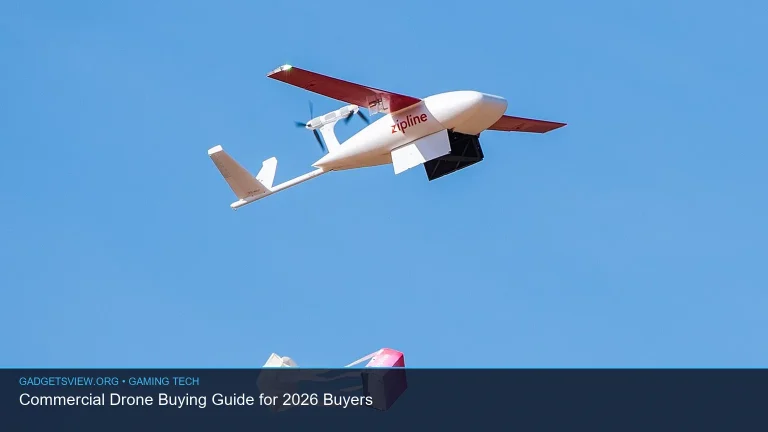
- Industrial transport or delivery concepts
How to Evaluate a Heavy Lift Drone Before You Buy

The best heavy lift drone is not always the one with the biggest payload number. You need to compare the full system, including battery setup, frame size, flight controls, and support for the equipment you plan to mount. If a vendor provides current specifications, review them closely and verify them before purchase.
Start with the payload rating, but do not stop there. A drone that can lift a lot of weight but only stays airborne for a very short time may not be practical for field work. Also check whether the rated payload includes mounting hardware, gimbals, or only bare cargo weight.
| Selection Criterion | What to Check | Why It Matters |
|---|---|---|
| Payload capacity | Max safe carry weight, not just theoretical lift | Affects what gear you can mount and how stable the drone stays |
| Flight time | Expected airtime with your real payload | Heavy loads reduce endurance fast |
| Stability and control | Flight controller quality, wind handling, GPS performance | Improves safety and image or sensor quality |
| Payload integration | Mounting points, power output, accessory support | Determines whether your gear will actually work on the drone |
| Compliance | FAA rules, Remote ID, waivers if needed | Keeps your commercial operation legal |
Commercial Use Cases: Creators, Inspectors, and Industrial Teams
Different buyers need different strengths. A creator may care most about camera support and smooth flight for cinematic shots. An inspection team may care more about long-range control, stable hovering, and the ability to carry sensors. An industrial buyer may care about repeatability, serviceability, and payload flexibility.
This is why a heavy lift drone guide should focus on use, not hype. The best drone for aerial video may not be ideal for mapping or cargo work. Matching the airframe to the job is the fastest way to avoid overspending.
Who each type of buyer usually prioritizes
- Creators: smooth control, gimbal support, low vibration, and fast setup
- Inspectors: stable hover, reliable positioning, and sensor compatibility
- Industrial teams: durability, payload flexibility, and maintenance access
- Advanced builders: open integration, custom power systems, and modular design
Safety, Compliance, and Legal Checks for US Buyers

Commercial drone use in the US is not just about the aircraft. It also involves FAA rules, airspace awareness, and any waivers or certifications required for your type of operation. If you plan to use a heavy lift drone for business, verify current requirements before you buy or fly.
Remote ID may also matter depending on the drone and how it is used. Requirements can change, and the right setup depends on the aircraft class and operation. Always confirm current FAA guidance and local rules before putting a drone into service.
Practical safety checklist
- Confirm the drone can handle your payload with a safe margin.
- Test takeoff, hover, and landing with minimal gear first.
- Check battery health before every flight.
- Inspect arms, mounts, propellers, and fasteners before use.
- Review the flight area for people, buildings, wires, and restricted airspace.
- Have a fail-safe plan for signal loss or battery warning events.
For commercial work, it is smart to build internal operating rules too. That can include preflight checklists, maintenance logs, and payload approval steps. These habits reduce accidents and help protect your equipment investment.
Heavy Lift Drone Strengths, Limitations, and Best-Fit Verdicts
Heavy lift drones offer clear advantages, but they also bring tradeoffs. More lift usually means more size, higher cost, faster battery drain, and greater setup complexity. Buyers should compare these tradeoffs against the real job they need to do.
| Buyer Type | Strengths to Prioritize | Limitations to Watch | Who Should Choose What |
|---|---|---|---|
| Film creators | Smooth flight, payload flexibility, gimbal support | Extra setup time and shorter flight time with gear attached | Choose a platform built for stable aerial capture and accessory support |
| Inspection teams | Hover stability, sensor support, dependable control | May need specialized accessories and training | Choose a drone that supports the exact sensor or camera you use |
| Industrial buyers | Durability, service access, modular payloads | Higher operating complexity and maintenance demands | Choose a rugged system with support and repair options |
| Custom builders | Open integration, frame flexibility, power tuning | Requires more technical skill and testing | Choose a platform that supports custom payloads and future upgrades |
Verdict: if your work depends on reliable payload delivery and repeatable flights, choose the drone that best matches your load and operating environment, not the one with the loudest marketing claim. If your needs are still evolving, a modular platform is often safer than a fixed, highly specialized setup.
Maintenance, Troubleshooting, and Long-Term Ownership Costs
Heavy lift drones usually cost more to own than lighter models because the parts work harder. Batteries age faster under high load, motors may run hotter, and propellers can wear more quickly. Good maintenance is not optional if you rely on the drone for business.
Before each flight, check propellers for chips or bends, confirm all mounts are secure, and inspect the battery for swelling or damage. If the drone starts pulling to one side, vibrating, or losing lift, stop and diagnose the issue before the next flight.
Simple troubleshooting table
| Problem | Possible Cause | What to Do |
|---|---|---|
| Short flight time | Payload too heavy, aging battery, wind conditions | Reduce load, test batteries, and compare real-world results with spec claims |
| Vibration or unstable footage | Unbalanced props, loose mounts, poor tuning | Inspect hardware and recalibrate as needed |
| Uneven lift | Motor issue, frame damage, or uneven payload placement | Remove the payload, check alignment, and test again at low altitude |
| Control lag | Signal interference, range limits, settings problem | Relocate to a cleaner RF area and verify system settings |
Long-term ownership cost also includes spare parts, batteries, charger systems, training, and downtime. For commercial users, the real cost is often not the drone itself. It is the time lost when the drone is unavailable.
FAQ: Heavy Lift Drone Buyer Questions
What makes a drone “heavy lift” instead of just “large”?
A heavy lift drone is defined by its ability to carry meaningful payloads safely and consistently. Size alone does not make it heavy lift. The key is usable payload capacity and stable performance with gear attached.
Can I use a heavy lift drone for commercial work in the US?
Yes, but you must follow current FAA rules and any other applicable requirements. That may include registration, Remote ID compliance, airspace checks, and operating under the proper commercial framework. Always verify the latest guidance before flying.
Should I choose the highest payload rating available?
Not always. A higher payload rating can be useful, but only if the drone also meets your needs for flight time, stability, and support. The best choice is the one that matches your actual mission.
What should creators look for first?
Creators should focus on stable flight, vibration control, and support for their camera or gimbal setup. Payload capacity matters, but only as part of a complete aerial imaging system.
How do I know if a heavy lift drone is right for my team?
If your work regularly requires carrying large or specialized gear, a heavy lift drone may be the right fit. If you only need a standard camera platform, a lighter drone may be simpler, cheaper, and easier to operate.
Conclusion: Start with the Job, Then Match the Drone
The smartest way to buy a heavy lift drone is to begin with your real use case. Decide what you need to carry, how often you fly, where you fly, and what level of compliance your work requires. Then compare payload, flight time, control quality, and support before you buy.
For US buyers and creators, the best move is to verify current FAA rules, compare options against your gear, and choose a drone that can handle your work with margin to spare. That approach is safer, more efficient, and far more cost-effective than chasing the biggest spec sheet.
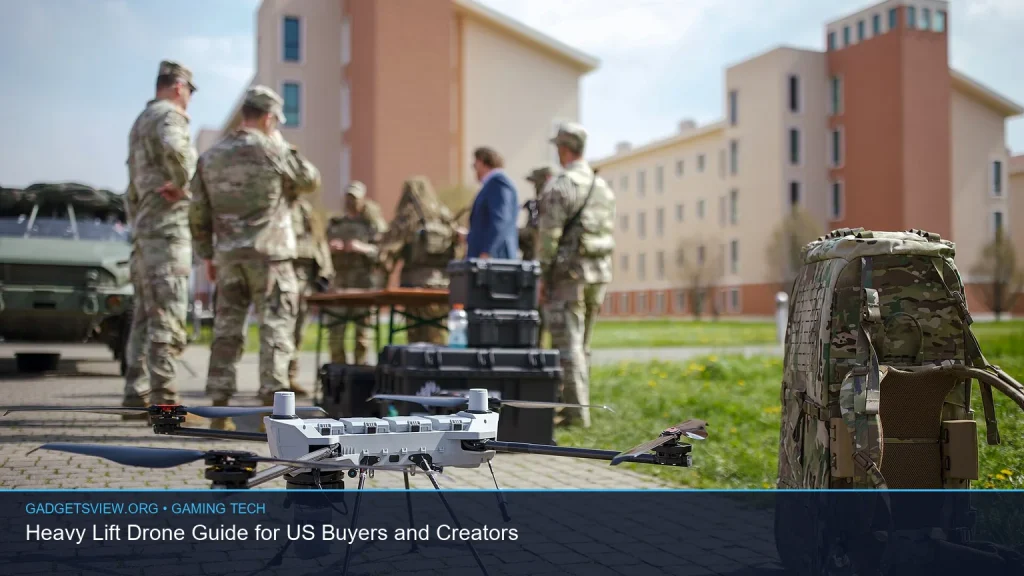
Featured image: Photo: U.S. Army photo by 1st Lt. Tucker Chase / Public domain via Wikimedia Commons