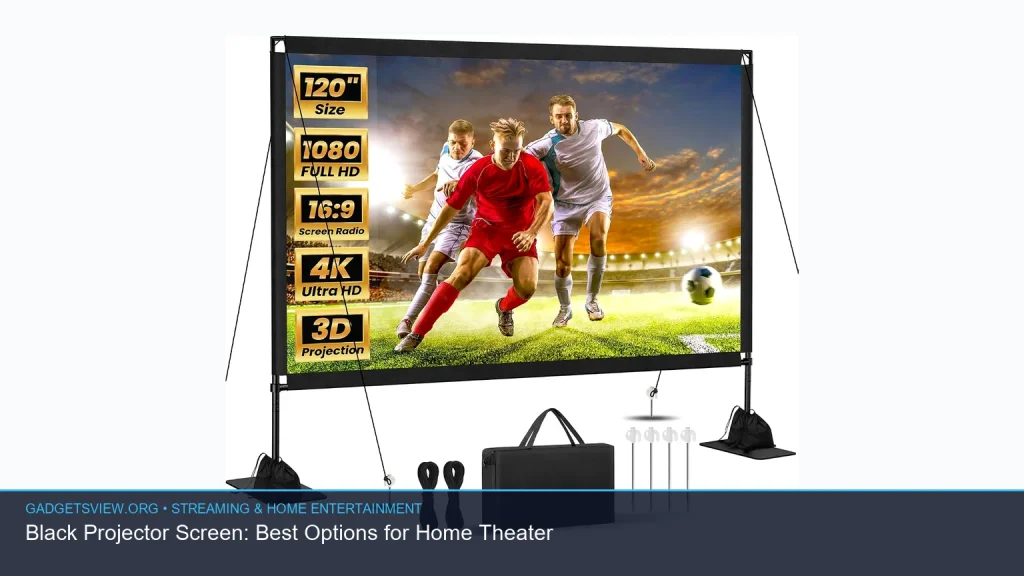
If you want a better home theater image, a black projector screen can be a smart choice. Black screens are built to help darker scenes look richer, cut down on room light spill, and improve contrast in spaces that are not fully light-controlled. The best option depends on your projector brightness, room lighting, and how you plan to watch. Below, we break down what matters, what to compare, and which type of black projector screen fits different home theater setups.
📖 Table of Contents
- What a Black Projector Screen Does Best
- Best Black Projector Screen Options for Home Theater
- How to Choose the Right Black Projector Screen
- Black Projector Screen Strengths and Trade-Offs
- When a White or Gray Screen May Be Better
- Installation and Setup Tips That Matter
- FAQs About Black Projector Screens
- Conclusion: The Best Black Projector Screen Is the One That Fits Your Room
📌 Key Takeaways
- A black projector screen can boost perceived contrast, especially in rooms with some ambient light.
- The right choice depends on your projector’s brightness, your room color, and how far you sit from the screen.
- Fixed-frame screens usually deliver the best flatness and image consistency for dedicated home theaters.
- For mixed-use rooms, choose a screen surface that balances ambient-light control with natural color and enough brightness.
What a Black Projector Screen Does Best
A black projector screen is designed to help the image stand out against light in the room. Instead of reflecting light as strongly as a white screen, it can absorb more spill light and make dark scenes look deeper. That can be useful if you watch movies with lamps on, have light-colored walls, or cannot fully block daylight.
This does not mean black screens are always better. In a fully dark room, a white screen may still offer a very bright, clean image. The best screen type depends on your viewing conditions, not just the color of the surface.
Why contrast matters more than raw brightness
Many buyers focus only on projector lumens, but contrast often matters more for movie enjoyment. A screen that helps black levels look stronger can make the whole picture feel more cinematic. That is why black projector screen options are popular for dedicated theater spaces and darker media rooms.
If your projector is already bright and your room has some ambient light, the screen can help keep the image from looking washed out. If your projector is dim, the extra light absorption may make the picture feel too dark.
Best Black Projector Screen Options for Home Theater
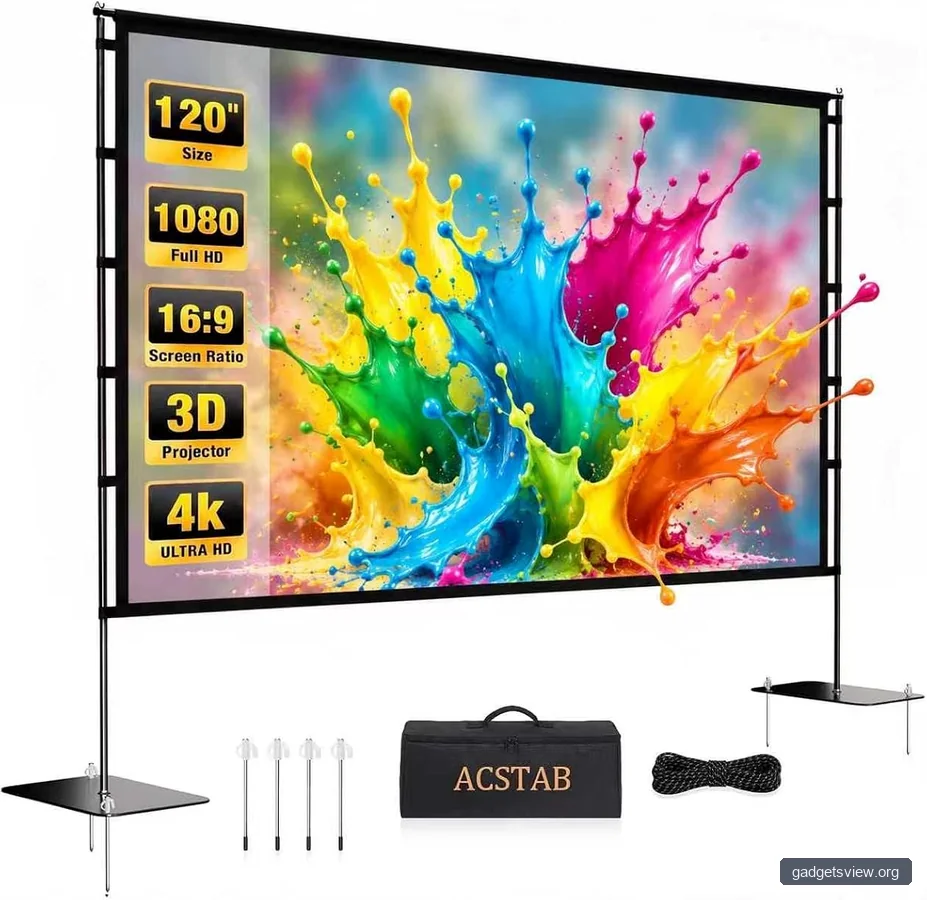
Because no product list was provided, the most useful way to shop is by screen type. The best option is the one that matches your space, projector, and viewing habits. Use the table below to narrow the field before you compare specific models.
| Screen Type | Best For | Strengths | Limitations |
|---|---|---|---|
| Fixed-frame black screen | Dedicated home theater rooms | Very flat surface, strong image consistency, clean look | Not movable, needs wall space |
| Ambient light rejecting black screen | Rooms with some daylight or lamp use | Helps fight washout, improves perceived contrast | Can be more angle-sensitive |
| Motorized black screen | Multi-use living rooms | Retracts when not in use, cleaner daily setup | More complex setup, quality varies |
| Portable black screen | Temporary setups and renters | Easy to move, flexible placement | Usually less stable and less flat than fixed-frame |
Who should choose what: if you want the most cinematic result in a dedicated room, choose a fixed-frame black screen. If your room has light you cannot fully control, look at an ambient light rejecting option. If you need flexibility, a motorized or portable screen may be the better fit.
How to Choose the Right Black Projector Screen
Selection is easier when you break it into a few clear criteria. Start with your room, then look at your projector, and only then compare screen features. That order helps you avoid paying for a surface that does not match your setup.
1. Room lighting
Dark, light-controlled rooms usually work best with a fixed-frame screen. If you watch with daylight, recessed lights, or table lamps, a screen built to handle ambient light can improve the picture. Black screens are often chosen for this exact reason.
2. Projector brightness
A black screen can make contrast look better, but it can also reduce overall reflected brightness. That means a weaker projector may struggle if the screen is too dark or the room is not light-controlled. Make sure your projector has enough brightness for your screen size and room.
3. Viewing angle
Some surfaces look best when you sit centered in front of the screen. Others may lose brightness at wider angles. If your family watches from different parts of the room, a screen with more forgiving viewing characteristics may be the safer choice.
4. Mounting space and use case
A dedicated theater room can handle a fixed-frame screen very well. A living room may need a screen that retracts or blends into the space when not in use. Match the form factor to how often the screen will stay visible.
Black Projector Screen Strengths and Trade-Offs
Every screen type comes with compromises. A black projector screen is appealing because it can make images look deeper and more controlled, but it is not the universal answer for every room. Understanding the trade-offs helps you buy with confidence.
Strengths
- Improves perceived black levels in many real-world rooms.
- Can reduce the washed-out look caused by ambient light.
- Often works well for movie watching and dark content.
- Pairs well with brighter projectors in medium-light environments.
Limitations
- May reduce overall brightness if the projector is not strong enough.
- Some surfaces are more sensitive to seating position.
- Not every room needs ambient-light rejection.
- Quality varies widely across screen materials and builds.
In simple terms, black screens help most when your room creates contrast problems. They help less when your theater already has excellent light control and a projector with strong contrast.
When a White or Gray Screen May Be Better
A black projector screen is not always the best answer. In some setups, a white or gray screen may produce a more balanced and brighter image. This is especially true if your room is dark and your projector is not ultra-bright.
Gray screens can be a middle ground. They often preserve brightness better than black screens while still helping with perceived contrast. If you want a natural image and do not have major light issues, gray may be the more flexible choice.
Simple decision guide
| If your room looks like this | Best starting point |
|---|---|
| Fully dark dedicated theater | Fixed-frame white or gray, depending on projector brightness |
| Light-controlled room with some stray light | Black projector screen or ambient-light rejecting screen |
| Living room with lamps and daylight | Ambient-light rejecting screen, often with darker surface options |
| Bright projector but mixed lighting | Black or gray screen, depending on brightness needs |
Installation and Setup Tips That Matter
Even the best screen will underperform if it is installed badly. Flatness, alignment, and distance all affect image quality. A careful setup can make a bigger difference than many buyers expect.
- Check wall space first. Make sure the screen size fits your room without crowding speakers, doors, or furniture.
- Match the screen to projector throw distance. Your projector must fill the screen cleanly without excessive zoom stress or lens shift limits.
- Mount it level. A crooked frame or uneven tension can make the image look distorted.
- Control stray light. Close curtains, dim lamps, and reduce reflections near the screen if possible.
- Test with real content. Use dark scenes, bright sports, and subtitles to judge whether the screen surface works for your viewing habits.
If the image still looks flat or dim, do not assume the screen is the only problem. Projector settings, room color, and placement often play a major role. Small changes can improve results fast.
FAQs About Black Projector Screens
Is a black projector screen better than a white one?
Not always. A black projector screen is often better in rooms with some ambient light because it can improve perceived contrast. A white screen may be better in a fully dark room where brightness is the priority.
Do black projector screens work with any projector?
Most projectors can work with them, but brightness matters. A dim projector may look too dark on a black screen, especially if the screen is large or the room is not fully dark. Always check that your projector has enough output for your setup.
Are black projector screens good for daytime viewing?
They can help, but only up to a point. If the room gets a lot of daylight, you may need an ambient-light rejecting screen and better light control. The screen alone cannot fix a very bright room.
What is the best black projector screen type for a home theater?
For a dedicated theater room, a fixed-frame black screen is often the best place to start. It usually gives the flattest surface and the cleanest look. For shared rooms, a motorized or ambient-light rejecting option may be more practical.
Do black projector screens affect color accuracy?
They can, depending on the material and how much light the room reflects back at the screen. A quality screen should keep colors natural, but cheaper materials may introduce unwanted shifts. When possible, look for current manufacturer details and independent verification before buying.
Conclusion: The Best Black Projector Screen Is the One That Fits Your Room
A black projector screen can be a strong upgrade for the right home theater. It is especially useful when you want better contrast and your room is not perfectly dark. The best choice depends on your projector brightness, your lighting, and whether you want a fixed, retractable, or portable setup.
Before you buy, compare screen type, mounting needs, and ambient-light control. If you are building a dedicated theater, start with a fixed-frame black screen. If your room is shared or bright, focus on a screen designed to handle ambient light first.