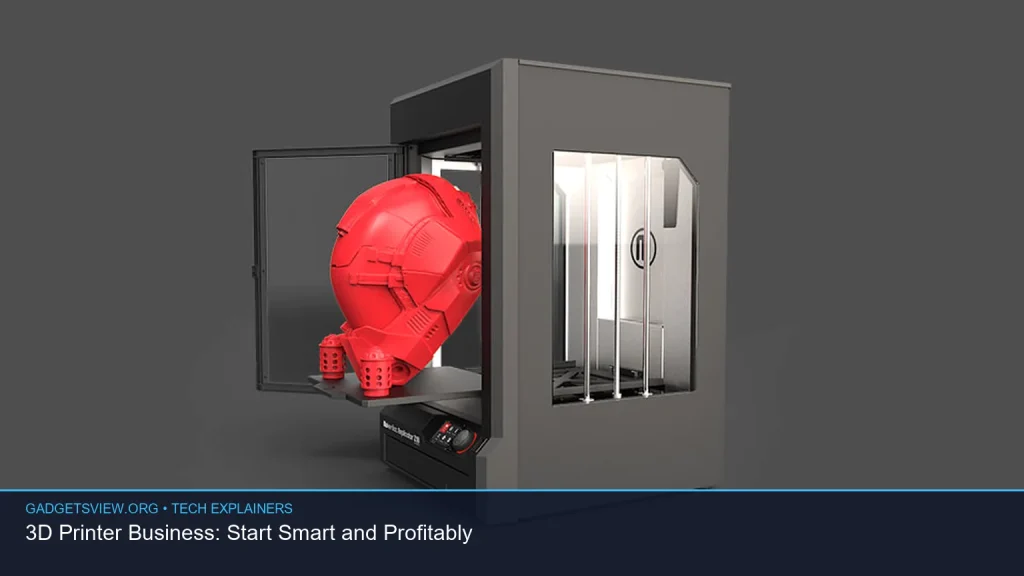
Starting a 3d printer business can be a smart way to turn digital designs into real products, custom parts, and steady income. But profit does not come from buying a printer alone. It comes from choosing the right niche, controlling costs, pricing with care, and building a workflow that can scale. This guide breaks down what to sell, how to start, and how to avoid common mistakes so you can make a smart decision before you invest.
📖 Table of Contents
📌 Key Takeaways
- A profitable 3D printer business starts with a clear niche, not a random list of products.
- Success depends on workflow, material choice, post-processing, and realistic pricing.
- B2B services, prototypes, replacement parts, and custom items often work better than generic print sales.
- Before scaling, test demand, calculate true costs, and confirm any legal or safety needs for your product type.
What a 3D Printer Business Really Is
A 3D printer business is any venture that makes money by printing objects on demand or in small batches. That can include custom parts, prototype models, hobby items, display pieces, tools, jigs, and replacement components. Some owners sell finished products, while others offer a print service to designers, engineers, makers, or local businesses.
The best model depends on what you can produce well and what buyers need often. If your goal is profit, you should think beyond the machine itself and focus on repeatable jobs, low waste, and fast turnaround. The printer is just one part of the system.
Pick a Business Model That Fits Demand
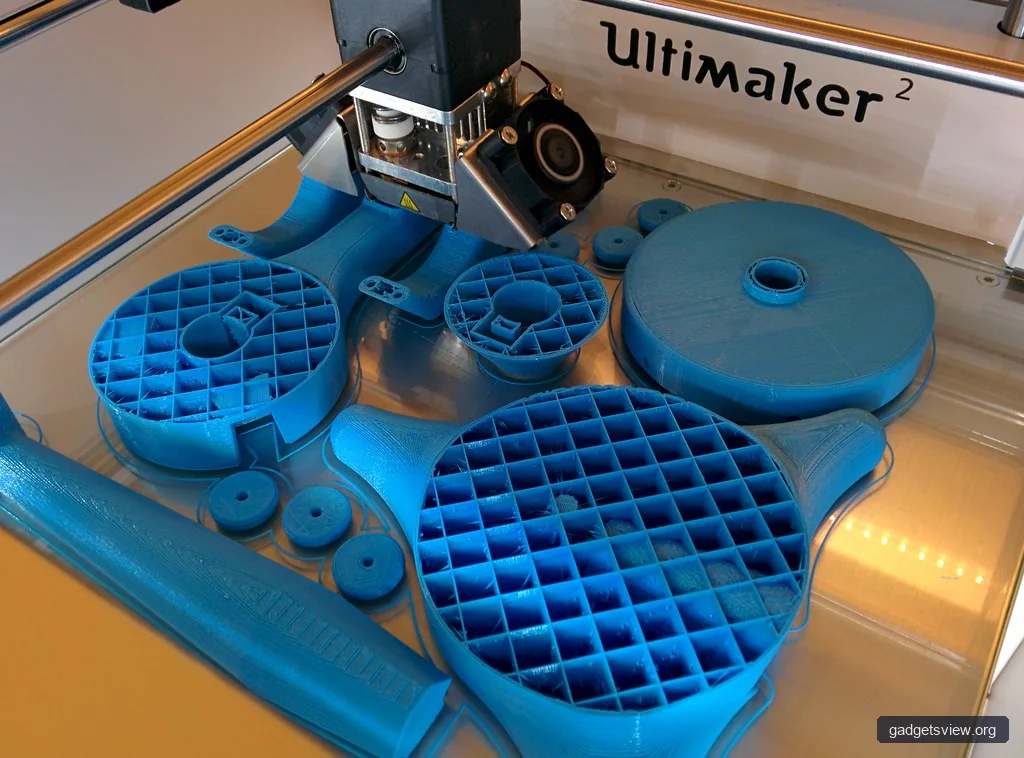
Not every 3D printing idea makes money in the same way. Some models are easier to start, while others can scale better. A smart approach is to choose a lane that matches your skills, your local market, and the amount of time you can spend on setup and support.
Common 3D printer business models
| Model | Best for | Strengths | Limitations | Who should choose it |
|---|---|---|---|---|
| Custom print service | One-off jobs, local clients, designers | Low inventory, broad demand | Requires quoting and file review | Beginners who want flexible work |
| Niche product brand | Repeatable consumer products | Better branding and repeat sales | Needs product-market fit | Sellers who like marketing and design |
| B2B prototyping | Engineers, startups, product teams | Higher-value jobs, recurring clients | Needs technical communication | People comfortable with business clients |
| Replacement parts | Broken clips, brackets, covers | Clear problem-solving value | May require reverse engineering | Makers who can measure and iterate |
Clear verdict: If you want the simplest start, a custom print service is usually the easiest path. If you want stronger branding and repeat buyers, a niche product line may be better. For higher-value work, B2B prototyping and replacement parts often offer the best profit potential, but they also demand more skill.
Choose a Niche Before You Buy More Gear
Many new owners make the same mistake: they buy hardware first and ask questions later. A better plan is to choose a niche, study demand, then match the printer to the job. That helps you avoid overspending on features you may never use.
Good niches are specific. Think in terms of user groups and use cases, such as tabletop gaming accessories, cosplay props, organizer inserts, industrial jigs, architectural models, educational aids, or custom shop tools. The more precise your niche, the easier it is to market your work.
Selection criteria that matter most
- Customer pain point: What problem does the print solve?
- Repeat demand: Can the same buyer come back again?
- Print reliability: Is the item easy to produce consistently?
- Material fit: Does the job need standard filament, flexible material, or a specialty option?
- Post-processing needs: Will the part need sanding, support removal, or finishing?
- Legal and safety risk: Could the item create liability if it fails?
As a rule, start with products that are useful, light to ship, and simple to explain. If a buyer can understand the value in one sentence, you are in a better position to sell it.
Build a Simple, Profitable Workflow
A profitable 3D printer business needs more than a machine and a design file. You need a clean workflow from quote to delivery. Every extra minute spent fixing files, reprinting failed parts, or answering vague questions eats into margin.
For most small businesses, the workflow should be simple: receive the request, check the file, estimate print time and material use, confirm the price, print, inspect, finish, and ship or deliver. If any step is unclear, slow it down before accepting the order.
Ordered steps to start smart
- Pick one service or product niche. Start narrow so you can learn fast.
- Define your ideal customer. Local makers, online shoppers, small businesses, or hobbyists all need different offers.
- Estimate true costs. Include filament, electricity, failed prints, labor, packaging, and platform fees.
- Create a quoting method. Use print time, material amount, complexity, and finishing effort.
- Test a few sample jobs. Make sure your process is repeatable before you advertise heavily.
- Document settings and quality checks. This reduces mistakes and helps with scaling.
- Track every order. Note time spent, failure points, and profit per job.
At the start, many owners undervalue their labor. That is risky. If a job ties up the machine for 12 hours and needs another hour of cleanup, the price should reflect that reality.
How to Price Without Guessing
Pricing is where many 3D printing businesses fail. If you price too low, you win orders but lose money. If you price too high without proof of value, you lose buyers. The answer is a pricing model that covers costs and leaves room for profit.
A basic method is to combine material cost, machine time, labor, overhead, and a profit margin. That is not fancy, but it is effective. You can also adjust pricing for rush jobs, difficult geometry, or special finishes.
| Cost factor | What to include | Why it matters |
|---|---|---|
| Material | Filament or resin used in the part | Direct production cost |
| Machine time | Printer occupancy during the job | Limits how many jobs you can take |
| Labor | Setup, cleanup, support removal, packing | Protects your time |
| Overhead | Utilities, software, marketing, wear parts | Keeps the business sustainable |
Selection tip: Use simple quotes early on. Clear, consistent pricing is often better than custom math for every tiny request. Just be sure your formula still covers all your costs.
Know the Risks Before You Scale
3D printing is flexible, but it is not risk-free. Print failures happen. Files may be broken. Customers may want parts that are not suitable for 3D printing. In some cases, a failed part can create safety, product liability, or intellectual property concerns.
That means you need boundaries. Do not promise structural performance without verification. Be careful with parts used in vehicles, medical settings, electrical systems, or anything where failure could cause harm. If a part is safety-critical, the job may require engineering review and proper testing beyond a typical small business setup.
Common problems and what to do
| Problem | Likely cause | Best response |
|---|---|---|
| Warping | Temperature mismatch or poor bed adhesion | Adjust settings, improve surface prep, change material if needed |
| Weak parts | Wrong orientation or infill choice | Reorient model, increase wall count, revise design |
| Stringing or rough finish | Temperature or retraction issue | Tune settings and confirm material dryness |
| Failed quote margins | Underestimating time or labor | Review past jobs and raise minimum order values |
If you work with a new niche, test a few sample prints before you sell publicly. That small step can save you from refunds, complaints, and wasted time later.
How to Market a 3D Printer Business
Marketing works best when it shows a clear outcome. Buyers do not want a printer spec sheet. They want a solution to a problem. Show the part, show the use case, and explain why custom printing is faster or better than buying something generic.
For a US audience, local visibility can matter a lot. A simple website, local business listings, social proof from completed projects, and direct outreach to small shops or creators can all help. If your niche is visual, photos and short videos are especially useful.
What usually works well
- Before-and-after photos of broken or missing parts replaced by a print
- Short use-case pages for each niche
- Simple order forms with file upload options
- Local networking with makerspaces, repair shops, and designers
- Content that explains how custom printing saves time or reduces downtime
Do not try to sell to everyone at once. One strong niche page often beats ten vague product pages. Clarity helps both search engines and buyers.
FAQ
Is a 3D printer business profitable?
It can be profitable, but only if your pricing covers material, machine time, labor, and overhead. Businesses with repeat customers, clear niches, and efficient workflows are more likely to do well than those selling random prints.
What is the easiest 3D printing business to start?
A custom print service is often the easiest because it does not require building a large product inventory. You can start with small jobs, learn what people ask for, and refine your offer over time.
Do I need a large printer to make money?
Not always. A large printer can help with bigger parts, but many profitable jobs are small. The better choice depends on your niche, part size, material needs, and turnaround goals.
Should I sell on marketplaces or build my own site?
Many beginners start on marketplaces because they already have traffic. A standalone website can help later with branding, search visibility, and repeat customers. Using both can be a strong long-term approach.
What should I avoid when starting out?
Avoid buying too much equipment before you know what buyers want. Also avoid underpricing your time, taking unsafe jobs without review, and trying to serve too many niches at once.
Starting a 3d printer business is less about owning hardware and more about solving a real need in a repeatable way. Pick one niche, test demand, price carefully, and build a process you can trust. If you do that first, you give yourself a much better shot at turning a maker setup into a real business.
Next step: choose one niche, write a simple offer, and test it with a few sample jobs before you invest in more equipment or marketing.
Featured image: Photo: Creative Tools / CC BY 2.0 via flickr