

Tower Fan vs Ceiling Fan Which Is Best for 2026
May 18, 2026
Choosing between a tower fan and a ceiling fan in 2026 depends on your space, budget, and cooling needs. Tower fans are compact, portable, and ideal for personal cooling, while ceiling fans offer whole-room airflow and energy efficiency—especially with smart home integration.
Key Takeaways
- Ceiling fans are better for whole-room cooling: They circulate air across large spaces, making them ideal for living rooms and bedrooms.
- Tower fans excel in personal and targeted cooling: Perfect for small rooms, offices, or beside your bed for direct airflow.
- Ceiling fans are more energy-efficient over time: Modern models use as little as 30 watts, saving on electricity bills.
- Tower fans are portable and easy to set up: No installation needed—just plug in and go.
- Smart features are now standard in both: Many 2026 models offer app control, voice commands, and scheduling.
- Ceiling fans require ceiling mounting and wiring: Installation can be complex and may need a professional.
- Tower fans are quieter but less powerful: Great for light sleepers, but may not cool large areas effectively.
Quick Answers to Common Questions
Which fan cools a room faster?
Ceiling fans cool a room faster because they move more air across a larger area. Tower fans are better for personal cooling but take longer to affect the whole room.
Can I install a ceiling fan myself?
Yes, if you’re comfortable with basic electrical work. However, for safety and proper mounting, many homeowners hire a licensed electrician.
Do tower fans use a lot of electricity?
No. Most tower fans use between 50 and 100 watts—similar to a light bulb. They’re energy-efficient for short-term use.
Are smart fans worth it in 2026?
Yes. Smart fans offer scheduling, voice control, and energy tracking, making them convenient and cost-effective over time.
Can I use a ceiling fan without AC?
Absolutely. Ceiling fans create a wind-chill effect that makes you feel cooler, allowing you to rely less on air conditioning.
📑 Table of Contents
- Introduction: The Great Fan Debate of 2026
- How Tower Fans Work in 2026
- How Ceiling Fans Work in 2026
- Performance Comparison: Cooling Power and Airflow
- Installation and Maintenance: What to Expect
- Cost and Long-Term Value
- Which Fan Is Best for Your Home in 2026?
- Final Verdict: Tower Fan vs Ceiling Fan in 2026
Introduction: The Great Fan Debate of 2026
As summer temperatures rise and energy costs climb, choosing the right fan isn’t just about comfort—it’s about smart living. In 2026, the tower fan vs ceiling fan debate is hotter than ever, with both options packed with advanced features, sleek designs, and eco-friendly tech. Whether you’re cooling a cozy studio apartment or a sprawling family room, the decision between these two fan types can make a big difference in your comfort and utility bills.
Ceiling fans have long been a staple in homes, offering consistent airflow and a stylish touch to any room. Meanwhile, tower fans have evolved from basic plastic units into sleek, smart appliances that blend into modern interiors. With innovations like AI-driven airflow, solar compatibility, and ultra-quiet operation, both fan types now offer more than just a breeze. So, which one is right for you in 2026? Let’s break it down.
How Tower Fans Work in 2026
Tower fans have come a long way from their clunky predecessors. Today’s models are slim, stylish, and loaded with tech. They use a vertical oscillating design to push air forward in a wide arc, creating a gentle, consistent breeze. Most 2026 tower fans feature multiple speed settings, remote controls, and even built-in air purifiers or humidifiers.
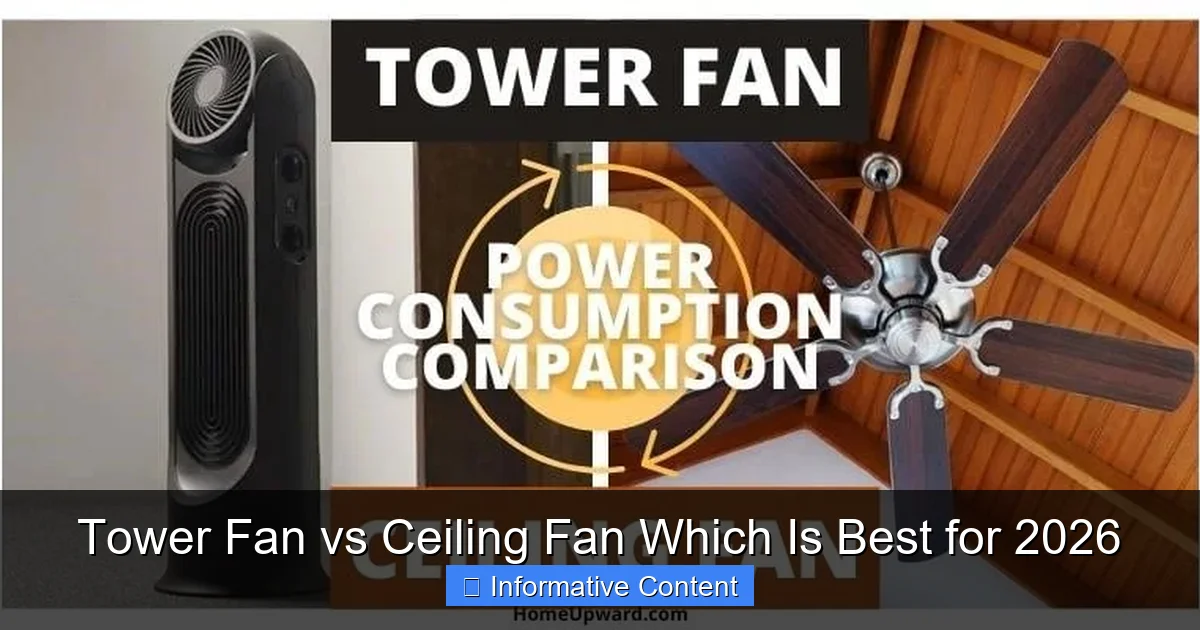
Visual guide about Tower Fan vs Ceiling Fan Which Is Best for 2026
Image source: homeupward.com
Design and Portability
One of the biggest advantages of tower fans is their compact footprint. Standing around 3 to 4 feet tall, they fit easily in corners, beside beds, or under desks. Unlike ceiling fans, they don’t require any installation—just plug them into an outlet and you’re ready to go. This makes them perfect for renters, small spaces, or anyone who wants flexibility.
Smart Features and Quiet Operation
Modern tower fans often include Wi-Fi connectivity, allowing you to control them via smartphone apps or voice assistants like Alexa and Google Assistant. Some models even use sensors to adjust speed based on room temperature. And thanks to improved motor technology, many 2026 tower fans operate at under 40 decibels—quieter than a whisper. That’s a game-changer for light sleepers or home offices.
How Ceiling Fans Work in 2026
Ceiling fans remain a top choice for whole-home cooling. In 2026, they’re more efficient and stylish than ever. These fans mount to the ceiling and use rotating blades to push air downward, creating a cooling effect known as the “wind-chill” effect. Many models now include reversible motors, allowing you to switch airflow direction seasonally—pushing cool air down in summer and circulating warm air in winter.
Energy Efficiency and Coverage
Ceiling fans are incredibly energy-efficient. A typical 2026 model uses between 30 and 75 watts—less than a standard light bulb. When paired with an air conditioner, they can help you raise the thermostat by 4–6 degrees without sacrificing comfort, leading to significant energy savings. They’re ideal for large rooms, open-concept spaces, and homes with high ceilings.
Smart Integration and Aesthetics
Today’s ceiling fans often come with built-in smart hubs, LED lighting, and app-based controls. You can schedule on/off times, adjust brightness, or sync with your smart home system. With finishes ranging from matte black to brushed brass, they’re also a design statement. Some even feature hidden blades or minimalist designs that blend seamlessly into modern interiors.
Performance Comparison: Cooling Power and Airflow
When it comes to raw cooling power, ceiling fans have the edge. They move more air across a larger area, making them better for cooling entire rooms. Tower fans, while effective, are designed for personal use—think of them as a targeted breeze rather than a room-wide solution.
Airflow and Coverage Area
A high-quality ceiling fan can move over 5,000 cubic feet per minute (CFM), covering spaces up to 400 square feet. Tower fans typically move between 500 and 1,500 CFM, best suited for rooms under 200 square feet. If you’re cooling a bedroom or home office, a tower fan might be enough. But for a living room or kitchen, a ceiling fan is the better choice.
Noise Levels and Comfort
Tower fans are generally quieter, especially on low settings. This makes them ideal for bedrooms or study areas. Ceiling fans can produce a soft hum, particularly at higher speeds, but many 2026 models are engineered for near-silent operation. Look for fans with DC motors—they’re quieter and more efficient than traditional AC motors.
Installation and Maintenance: What to Expect
Installation is where these two fans differ most. Tower fans are plug-and-play—no tools or expertise required. Ceiling fans, on the other hand, need to be mounted securely to a ceiling joist or support box, often requiring electrical wiring. If you’re not comfortable with DIY electrical work, hiring a professional is recommended.
Ease of Setup
Setting up a tower fan takes less than five minutes. Unbox, plug in, and adjust settings. Ceiling fans can take 1–2 hours to install, especially if you’re adding a new electrical box or remote control. Some brands now offer “easy-install” kits, but it’s still more involved than a tower fan.
Cleaning and Upkeep
Tower fans are easier to clean—most have removable front grilles and washable filters. Ceiling fans require you to dust the blades regularly, which can be tricky on high ceilings. Some 2026 models include self-cleaning modes or anti-dust coatings to reduce maintenance.
Cost and Long-Term Value
Upfront costs vary widely. Tower fans range from $50 to $200, with premium smart models on the higher end. Ceiling fans start around $100 and can go up to $500 or more for designer or smart-enabled versions. However, ceiling fans offer better long-term value due to their energy efficiency and durability.
Energy Savings Over Time
Because ceiling fans use less power and can reduce AC usage, they often pay for themselves within a few years. Tower fans are cheaper upfront but may need to run longer to achieve the same cooling effect, increasing energy use. For year-round savings, ceiling fans are the smarter investment.
Lifespan and Durability
Ceiling fans are built to last—many come with 10- to 15-year warranties and can operate for decades with proper care. Tower fans typically last 5–7 years, though high-end models may exceed that. If you’re looking for a long-term solution, ceiling fans are more durable.
Which Fan Is Best for Your Home in 2026?
The answer depends on your needs. If you want whole-room cooling, energy efficiency, and a stylish addition to your ceiling, go with a ceiling fan. It’s perfect for living rooms, master bedrooms, and open kitchens. If you need a portable, quiet fan for personal use—like beside your bed or at your desk—a tower fan is the way to go.
For many households, the ideal setup includes both. Use a ceiling fan for general cooling and a tower fan for targeted relief on extra-hot days. With smart home integration, you can even sync them to work together, adjusting airflow based on time of day or occupancy.
Final Verdict: Tower Fan vs Ceiling Fan in 2026
In 2026, both tower fans and ceiling fans offer impressive performance, smart features, and energy efficiency. Your choice should be based on room size, installation preferences, and cooling goals. Ceiling fans win for coverage and long-term savings, while tower fans shine in portability and quiet operation. Whichever you choose, you’re investing in comfort, style, and smarter cooling for the years ahead.
Frequently Asked Questions
Which is quieter: a tower fan or a ceiling fan?
Tower fans are generally quieter, especially on low settings. Many 2026 models operate below 40 decibels. Ceiling fans are also quiet but may produce a soft hum at higher speeds.
Do ceiling fans help reduce energy bills?
Yes. By allowing you to raise your thermostat setting, ceiling fans can reduce AC usage and lower energy costs by up to 40% in summer.
Can I use a tower fan in a large room?
It’s not ideal. Tower fans are best for small to medium spaces. In large rooms, they may not provide enough airflow for effective cooling.
Do I need a special ceiling for a ceiling fan?
Yes. Ceiling fans require a reinforced ceiling box and proper support. Sloped or high ceilings may need extended downrods or specialized mounting kits.
Are there eco-friendly fan options in 2026?
Yes. Many brands now offer fans made from recycled materials, solar-compatible models, and energy-efficient DC motors to reduce environmental impact.
Can I control both fans with my phone?
Most 2026 smart tower and ceiling fans support app control. Look for models with Wi-Fi or Bluetooth connectivity for seamless integration with your smartphone.