
Speaker Wire Gauge Selection Guide 2026
May 24, 2026
When it comes to building or upgrading a home audio system, most people focus on the big-ticket items: the speakers, the amplifier, the receiver. But one of the most overlooked—and surprisingly impactful—components is the humble speaker wire. It’s easy to assume that any old wire will do, especially when manufacturers often include basic cables in the box. However, the truth is that speaker wire gauge plays a critical role in sound quality, system efficiency, and long-term reliability. Choosing the right gauge isn’t just about technical specs—it’s about ensuring your investment in high-quality audio gear isn’t undermined by a bottleneck in the signal path.
This comprehensive guide is designed to demystify speaker wire gauge selection for everyone from first-time home theater builders to seasoned audiophiles. Whether you’re setting up a bookshelf stereo system in a small apartment or wiring a multi-zone surround sound setup in a dedicated media room, understanding wire gauge will help you avoid common pitfalls and get the best possible performance from your equipment. We’ll walk you through the science behind wire resistance, explain how distance and power affect your choice, and give you practical advice on balancing cost, performance, and durability.
The market today offers an overwhelming array of options—from budget-friendly 18-gauge zip cord to exotic oxygen-free copper (OFC) cables with silver plating and gold connectors. With prices ranging from under $20 to several hundred dollars for a single pair, it’s easy to overspend or underspend without knowing why. Our goal is to cut through the marketing noise and give you the tools to make an informed decision based on your specific needs, room layout, and audio goals.

What to Look for When Buying Buying Guide
1. Wire Gauge (AWG)
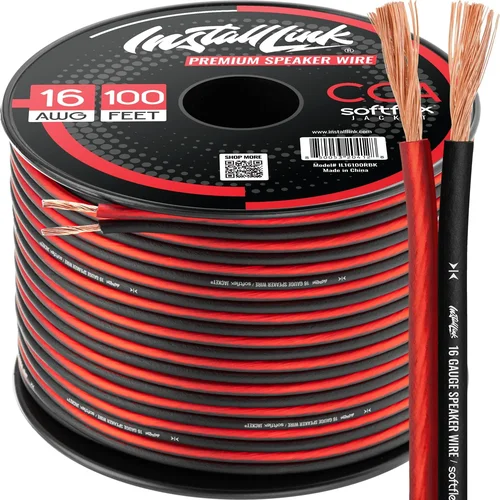
The American Wire Gauge (AWG) number is the most important specification when selecting speaker wire. It refers to the thickness of the conductor—the lower the number, the thicker the wire. Thicker wires (like 12 or 14 AWG) have less electrical resistance, which means they can carry more current over longer distances without signal loss. For short runs (under 50 feet) with modest-powered systems, 16 AWG is often sufficient. However, for longer runs or high-power amplifiers driving demanding speakers, 12 or even 10 AWG is recommended. Always check your amplifier’s power output and speaker impedance (usually 4, 6, or 8 ohms) to determine the ideal gauge.
2. Conductor Material
Copper is the standard conductor material due to its excellent conductivity and affordability. Look for “oxygen-free copper” (OFC) or “high-purity copper,” which reduces impurities that can degrade signal quality. Some premium cables use silver-plated copper, which offers slightly better conductivity but at a significant cost increase. Avoid aluminum or copper-clad aluminum (CCA), which have much higher resistance and are prone to oxidation—common in very cheap cables. For most users, solid-core or stranded OFC copper in the appropriate gauge delivers excellent performance without unnecessary expense.
3. Insulation and Jacketing
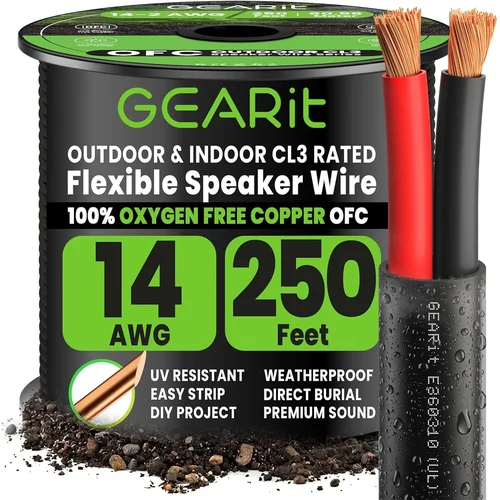
The insulation surrounding the wire serves two purposes: electrical safety and durability. PVC is the most common insulating material—it’s flexible, flame-resistant, and cost-effective. For in-wall installations, look for CL2 or CL3-rated cables, which meet fire safety codes for residential use. Outdoor or high-moisture environments may require UV-resistant or direct-burial rated jackets. Thicker insulation can add bulk but improves longevity and reduces interference. Avoid wires with flimsy or brittle jackets, as they can crack over time, especially in tight bends or cold temperatures.
4. Strand Count and Flexibility
Stranded wire (composed of many thin filaments) is more flexible and resistant to breakage than solid-core wire, making it ideal for home installations where wires are bent around corners or pulled through conduits. Solid-core wire is stiffer but can offer marginally lower resistance due to fewer contact points. For most residential setups, stranded wire is the practical choice. A higher strand count (e.g., 19 strands vs. 7) increases flexibility and durability. However, don’t confuse strand count with gauge—always prioritize the AWG rating first.
5. Connector Type and Termination
While the wire itself matters, how it connects to your gear is equally important. Bare wire connections are common and work fine if done properly, but spade connectors, banana plugs, and pin connectors offer more secure, corrosion-resistant connections. Banana plugs are especially popular for their ease of use and reliable contact. Gold-plated connectors resist oxidation and maintain conductivity over time. If you plan to frequently disconnect or rearrange your system, pre-terminated cables with quality connectors save time and reduce wear on speaker and amplifier terminals.
6. Length and Run Distance
Longer wire runs increase resistance, which can lead to power loss and reduced damping factor—especially with low-impedance speakers (4 ohms). As a rule of thumb, use 16 AWG for runs under 50 feet with 8-ohm speakers, 14 AWG for 50–100 feet, and 12 AWG for over 100 feet or with 4-ohm loads. If you’re wiring a large room or multiple zones, consider running slightly thicker wire than the minimum to future-proof your setup. Always measure the actual path the wire will take—don’t just use straight-line distance.
7. Shielding and Interference Protection
Unlike microphone or RCA cables, standard speaker wire does not require shielding because it carries amplified signals at high voltage and low current, making it less susceptible to electromagnetic interference (EMI). However, in environments with strong RF sources (like near Wi-Fi routers, fluorescent lights, or motors), or when running wires parallel to power cables, consider using shielded speaker wire or maintaining at least 12 inches of separation from AC lines. For most home users, unshielded wire is perfectly adequate.
8. Brand Reputation and Certifications
Stick with reputable brands like Monoprice, AudioQuest, Mediabridge, or Monster (for mid-tier options). These companies provide accurate specifications, consistent quality, and often include certifications like UL listing or CL2/CL3 ratings. Be wary of no-name brands on discount marketplaces that may mislabel gauge or use CCA instead of pure copper. Reading verified customer reviews and checking for third-party testing can help avoid counterfeit or substandard products.
Different Types of Buying Guide

Common Buying Mistakes to Avoid
❌ Mistake: Using Lamp Cord or Electrical Wire
Why it’s bad: Lamp cord is typically 18 AWG and not designed for audio signals. It often uses CCA instead of pure copper, leading to high resistance and potential overheating. Electrical wire may lack proper insulation ratings for in-wall use and isn’t color-coded for polarity.
What to do instead: Always use speaker-specific wire with clearly marked conductors (usually red and black) and appropriate gauge for your system.
❌ Mistake: Overpaying for “Audiophile” Cables with No Measurable Benefit
Why it’s bad: Many high-priced cables offer no measurable improvement in sound quality. Features like “cryogenic treatment” or “directional geometry” are often marketing gimmicks. You’re paying for branding, not performance.
What to do instead: Focus on proper gauge, quality copper, and good connectors. Save your budget for better speakers or amplification.
❌ Mistake: Ignoring Impedance and Amplifier Power
Why it’s bad: A 100-watt amplifier driving 4-ohm speakers demands more current than a 50-watt amp driving 8-ohm speakers. Using undersized wire can cause power loss, overheating, and even damage to your amp.
What to do instead: Match wire gauge to both amplifier power and speaker impedance. Use online calculators or consult manufacturer guidelines.
❌ Mistake: Buying Pre-Cut Cables Without Measuring
Why it’s bad: Pre-cut cables often come in standard lengths (e.g., 6ft, 10ft), which may not fit your room layout. Too short, and you can’t reach; too long, and you’re wasting money and creating clutter.
What to do instead: Measure your exact run distance (including bends and wall paths) and buy slightly longer than needed. Bulk wire with DIY termination is often more economical.
❌ Mistake: Neglecting Polarity
Why it’s bad: Reversing polarity (connecting red to negative and black to positive) can cause phase cancellation, reducing bass response and imaging accuracy—especially in multi-speaker setups.
What to do instead: Always match red to red (positive) and black to black (negative) on both amplifier and speaker ends. Use labeled or striped wires to avoid confusion.
❌ Mistake: Running Speaker Wire Parallel to Power Cables
Why it’s bad: This can induce hum or noise into the audio signal, especially with long runs. Power cables generate electromagnetic fields that interfere with low-level signals.
What to do instead: Cross power and speaker wires at right angles if possible, or maintain at least 12 inches of separation. Use metal conduit or shielded wire in high-interference areas.
Budget Guidelines: How Much Should You Spend?
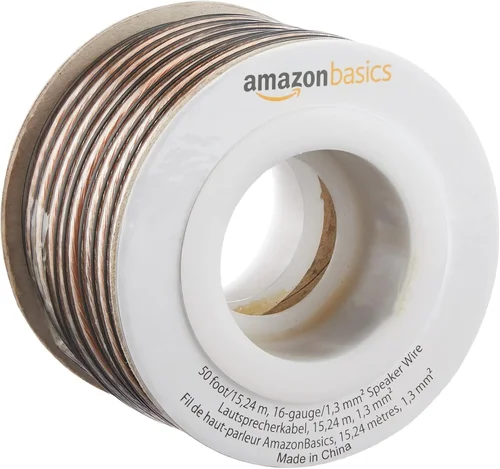
– Entry-Level ($0.10–$0.30 per foot): Ideal for small rooms, bookshelf speakers, or temporary setups. 16–18 AWG zip cord from reputable brands like Monoprice or AmazonBasics offers solid performance for the price. Expect basic PVC insulation and bare wire ends.
– Mid-Range ($0.30–$0.80 per foot): The sweet spot for most home theater and stereo enthusiasts. 14–12 AWG OFC wire with stranded conductors and durable jackets. Brands like Mediabridge and GearIT offer excellent value. Often includes pre-terminated options with banana plugs.
– Premium ($0.80–$2.00 per foot): For high-power systems, long runs, or critical listening. Features include gold-plated connectors, enhanced insulation, and sometimes bi-wire capability. AudioQuest and Blue Jeans Cable are top choices in this tier.
– Luxury ($2.00+ per foot): Reserved for audiophiles and professionals. May include exotic materials like pure silver, Litz construction, or cryogenic treatment. While build quality is exceptional, the audible benefits are often subtle and subjective. Best suited for reference systems where every detail matters.
Expert Tips for Getting the Best Deal
– Buy in bulk during sales: Retailers like Monoprice, Amazon, and Best Buy often run promotions on speaker wire, especially during Black Friday, Prime Day, or back-to-school seasons. Purchasing a 500-foot spool can save 30–50% per foot.
– Choose the right retailer: Online stores offer better selection and pricing than big-box electronics stores. Monoprice and Blue Jeans Cable are known for transparency and quality. Avoid dollar stores or unknown eBay sellers.
– DIY termination saves money: Buying bulk wire and attaching your own banana plugs or spades costs less than pre-made cables. A good crimping tool pays for itself after a few uses.
– Check return policies: Some high-end cables come with satisfaction guarantees. If you’re unsure, buy from a seller with a generous return window to test in your system.
– Future-proof your installation: If running wire through walls or conduits, use slightly thicker gauge than currently needed. You won’t regret having 12 AWG available if you upgrade your amp later.
– Test before finalizing: Listen to familiar tracks before and after changing wires. While differences may be subtle, trust your ears—not just specs.
– Consider bi-wiring if supported: Some speakers have dual binding posts. Using two runs of wire can improve separation between woofer and tweeter circuits, but only if your speakers are designed for it.

Frequently Asked Questions
Q: Does speaker wire really affect sound quality?
A: Yes, but only when the wire is undersized for the application. Proper gauge ensures minimal resistance, preserving power delivery and damping factor. Beyond that, differences in conductor material or construction are often inaudible in real-world listening.
Q: Can I use 18 AWG wire for long runs?
A: Not recommended. 18 AWG has high resistance over distance, leading to power loss and potential overheating. Use 14 AWG or thicker for runs over 50 feet.
Q: Is oxygen-free copper (OFC) worth the extra cost?
A: For most users, yes—OFC reduces impurities that can degrade conductivity over time. However, the difference is marginal compared to standard copper in short-to-medium runs.
Q: Should I buy pre-terminated or bulk wire?
A: Pre-terminated is convenient for quick setups. Bulk wire is more cost-effective for custom lengths and permanent installations. Choose based on your skill level and project scope.
Q: Can I splice speaker wire?
A: Technically yes, but it’s not ideal. Splices can introduce resistance and fail over time. If necessary, use proper connectors or soldering with heat shrink. For in-wall runs, avoid splices altogether.
Q: Does wire directionality matter?
A: Some high-end cables claim directional performance, but there’s no scientific evidence supporting this. Focus on proper polarity instead.
Q: What’s the difference between CL2 and CL3 ratings?
A: CL2 is rated for in-wall use in residential settings, while CL3 is for commercial installations with higher fire safety requirements. For homes, CL2 is sufficient.
Q: Can I use speaker wire for subwoofers?
A: Yes, but subwoofers often draw more current. Use at least 14 AWG for powered subs, especially if the amp is built-in and high-powered.
Our Final Recommendations
– Best for Budget-Conscious Buyers: Monoprice 16 AWG 2-Conductor Speaker Wire – Reliable, affordable, and widely available. Perfect for small to medium rooms with modest systems.
– Best Overall Value: Mediabridge 14 AWG OFC Speaker Wire – Excellent balance of gauge, build quality, and price. Comes with clear polarity markings and durable jacket.
– Best Premium Option: AudioQuest Type 4 – High-purity copper, precision construction, and optional banana plugs. Ideal for high-end systems where every detail counts.
– Best for Beginners: AmazonBasics 16 AWG Pre-Cut Cables with Banana Plugs – Plug-and-play convenience with reliable performance. Great for first-time setups.
– Best for Advanced Users: Blue Jeans Cable LC-1 – 12 AWG OFC with Belden components, available in custom lengths. Trusted by professionals for critical installations.
Conclusion: Making the Right Choice
Selecting the right speaker wire gauge isn’t about chasing the most expensive option or obsessing over minor technical details. It’s about matching the wire to your system’s needs—considering amplifier power, speaker impedance, run length, and installation environment. A well-chosen wire ensures your audio signal travels efficiently, preserving dynamics, clarity, and power delivery without introducing noise or resistance.
Remember, the goal isn’t perfection—it’s sufficiency. For most home users, a quality 14 or 16 AWG OFC cable will deliver excellent results without breaking the bank. Avoid the extremes: don’t underspend with CCA junk, and don’t overspend on exotic cables with unproven benefits. Focus on the fundamentals, measure your runs, and prioritize safety and durability—especially for in-wall installations.
Ultimately, your ears are the best judge. If your system sounds clear, powerful, and balanced, you’ve made the right choice. Use this guide as your foundation, but don’t be afraid to experiment within reason. And when in doubt, lean toward a slightly thicker gauge—it’s a small investment that pays dividends in performance and peace of mind. Happy listening!