
Expert Speaker Wire Buying Guide 2026
May 24, 2026
Connecting speakers to your TV might seem straightforward, but choosing the right speaker wire can make a surprising difference in audio quality, system longevity, and overall user experience. Whether you’re setting up a basic soundbar, building a surround-sound home theater, or upgrading to high-end bookshelf speakers, the wire that links your TV to your audio system plays a critical role. Many people overlook this component, assuming “a wire is just a wire,” but the truth is far more nuanced. Poor-quality or improperly sized cables can introduce noise, reduce signal strength, and even damage equipment over time.
This comprehensive buying guide is designed to cut through the confusion and help you make an informed decision. You’ll learn how to match speaker wire specifications to your specific setup, understand what features truly matter, avoid common pitfalls, and get the best value for your budget. We’ll cover everything from gauge thickness and conductor materials to insulation types and connector compatibility—all tailored to real-world TV and speaker configurations. Whether you’re a casual viewer or an audiophile, this guide ensures you won’t overspend on unnecessary features or compromise performance with subpar wiring.
The market today offers an overwhelming array of options: budget-friendly bulk spools, premium oxygen-free copper cables, flat-profile wires for under-carpet runs, and even wireless alternatives that mimic wired connections. With brands ranging from generic Amazon sellers to audiophile favorites like Monoprice and AudioQuest, it’s easy to feel lost. But armed with the right knowledge, you can confidently select speaker wire that enhances—not hinders—your entertainment experience.

What to Look for When Buying Speaker Wire
1. Wire Gauge (AWG)
The American Wire Gauge (AWG) number indicates the thickness of the conductor inside the cable. Lower numbers mean thicker wire—for example, 12 AWG is thicker than 16 AWG. Thicker wire offers lower resistance, which is especially important for longer runs or higher-power amplifiers. For most home setups where the distance between your TV and speakers is under 25 feet, 16 AWG is sufficient. However, if you’re running wire across a large living room (30+ feet) or driving powerful floor-standing speakers, consider stepping up to 14 AWG or even 12 AWG. Using too thin a wire over long distances can cause voltage drop, leading to weaker bass and distorted highs.
2. Conductor Material
Copper is the standard conductor material, but not all copper is created equal. Look for “oxygen-free copper” (OFC) or “high-purity copper” in product descriptions—these variants have fewer impurities, which reduces signal degradation. Avoid cables labeled simply as “copper-clad aluminum” (CCA), as aluminum has significantly higher resistance and can overheat under load. While CCA wires are cheaper, they’re prone to failure and may void warranties on high-end audio gear. Always verify the material composition before purchasing, especially with budget brands.
3. Insulation and Jacket Quality
The outer jacket protects the internal conductors from physical damage, moisture, and electromagnetic interference (EMI). PVC is common and affordable, but for in-wall installations or outdoor use, look for CL2/CL3-rated or UV-resistant jackets. These ratings ensure safety compliance and durability. Thicker, flexible insulation also makes routing easier behind furniture or through walls. Avoid flimsy, brittle jackets that crack over time—they compromise both safety and longevity.
4. Connector Types
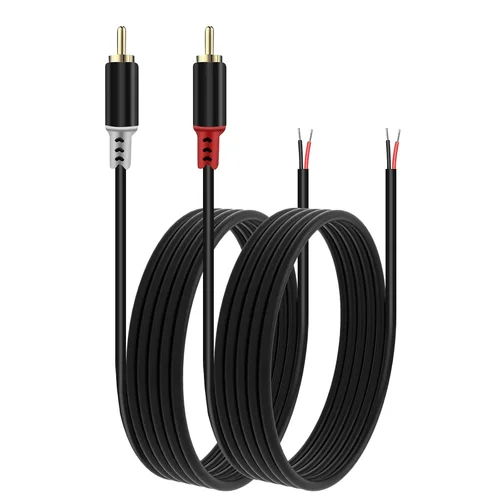
While bare wire ends work fine with spring clips, pre-attached connectors like banana plugs, spade terminals, or pin connectors offer cleaner, more secure connections—especially with binding posts on AV receivers or high-end speakers. Banana plugs are the most popular for their ease of use and reliable contact. If your TV or sound system uses RCA or optical outputs (common with soundbars), you won’t need traditional speaker wire at all—but if you’re connecting passive speakers directly to an amplifier or AV receiver linked to your TV, standard speaker wire with appropriate terminations is essential.
5. Length and Routing Needs
Measure the exact distance from your TV (or AV receiver) to each speaker, then add 10–15% extra for slack and routing around obstacles. Never stretch wire taut—it can break internally. For hidden installations under baseboards or in walls, consider flat or ribbon-style cables that fit discreetly. If you’re running wire across doorways or high-traffic areas, use protective conduit or cable raceways to prevent tripping hazards and wear.
6. Shielding and Noise Reduction
Unlike analog audio cables (e.g., RCA), standard speaker wire doesn’t typically include shielding because it carries amplified signals that are less susceptible to interference. However, in environments with strong EMI sources—like near power lines, Wi-Fi routers, or fluorescent lights—consider shielded speaker cable to minimize hum or buzz. This is rare for most homes but worth noting if you notice audio artifacts after installation.
7. Brand Reputation and Certifications
Stick with reputable brands known for consistent quality, such as Monoprice, Mediabridge, Amazon Basics, or Blue Jeans Cable. These companies often provide detailed specs, lifetime warranties, and responsive customer support. Be wary of no-name brands selling “audiophile-grade” wire at suspiciously low prices—they often exaggerate claims or use misleading marketing. Look for certifications like UL listing (for safety) or RoHS compliance (for environmental standards).
8. Budget vs. Performance Balance
You don’t need to spend $100 on a 6-foot cable to get good sound. In fact, for typical consumer setups, mid-priced wires ($0.50–$1.50 per foot) deliver performance indistinguishable from premium options. The law of diminishing returns applies heavily here: beyond a certain point, expensive cables offer negligible audible improvement. Focus instead on correct gauge, pure copper, and solid construction—not exotic materials or gold-plated everything.
Different Types of Speaker Wire

Common Buying Mistakes to Avoid
❌ Mistake: Ignoring Wire Gauge for Long Runs
Why it’s bad: Using 18 AWG wire for a 40-foot run to rear surround speakers can result in noticeable volume drop and weak bass response due to excessive resistance.
What to do instead: Use 14 AWG or thicker for distances over 25 feet. Calculate total resistance using online tools or consult your amplifier’s manual for recommendations.
❌ Mistake: Choosing Copper-Clad Aluminum (CCA) to Save Money
Why it’s bad: CCA wires have 55% higher resistance than pure copper, leading to overheating, connection failures, and potential damage to your amplifier.
What to do instead: Always verify the product description specifies “solid copper” or “OFC.” If unsure, check reviews or contact the manufacturer.
❌ Mistake: Overpaying for “Audiophile” Marketing Hype
Why it’s bad: Cables marketed with terms like “quantum tunneling” or “cryogenically treated” often cost 10x more without measurable performance gains in typical home environments.
What to do instead: Focus on objective specs (gauge, material, length) rather than subjective claims. Mid-tier cables from trusted brands deliver excellent results.
❌ Mistake: Skipping Proper Polarity
Why it’s bad: Reversing positive and negative terminals on one speaker causes phase cancellation, making sound thin and hollow—especially in stereo imaging.
What to do instead: Use wires with clearly marked polarity (e.g., striped insulation for negative) and double-check connections before powering on.
❌ Mistake: Using Electrical Wire Instead of Speaker Wire
Why it’s bad: Household electrical wire isn’t designed for audio signals and lacks proper insulation for low-voltage applications. It can also introduce noise and pose safety risks.
What to do instead: Always use dedicated speaker wire rated for audio use. It’s affordable and specifically engineered for this purpose.
❌ Mistake: Neglecting Future-Proofing
Why it’s bad: Installing thin wire now may limit upgrades later—for example, if you add a subwoofer or switch to a more powerful receiver.
What to do instead: If running wire through walls or conduits, install a slightly heavier gauge (e.g., 14 AWG instead of 16 AWG) to accommodate future needs.
Budget Guidelines: How Much Should You Spend?
- Entry-Level ($0.25–$0.50 per foot): Suitable for short runs (under 15 feet) with compact speakers or soundbars. Look for basic 16 AWG copper wire from brands like Amazon Basics or Mediabridge. Expect decent performance but minimal frills.
- Mid-Range ($0.75–$1.50 per foot): The sweet spot for most buyers. Offers 14–16 AWG OFC wire with robust jackets and optional pre-attached connectors. Ideal for full surround systems and longer distances. Brands like Monoprice and Blue Jeans Cable excel here.
- Premium ($2.00–$4.00 per foot): For enthusiasts with high-end amplifiers and speakers. Features ultra-pure OFC, advanced insulation, and precision terminations. Audible benefits are subtle but may appeal to critical listeners.
- Luxury ($5.00+ per foot): Reserved for boutique audiophiles. Often includes exotic materials, hand-soldered connectors, and artistic designs. While beautifully crafted, the sonic improvement over mid-range options is rarely justified for typical home use.
Expert Tips for Getting the Best Deal
- Shop during holiday sales: Black Friday, Prime Day, and back-to-school seasons often feature deep discounts on audio cables—sometimes up to 50% off.
- Buy online for better selection: Retailers like Amazon, Monoprice, and Crutchfield offer detailed specs, user reviews, and hassle-free returns—something big-box stores rarely match.
- Check return policies: Ensure the seller allows returns if the wire doesn’t meet your needs. Some premium brands offer lifetime guarantees.
- Bundle with other components: Many AV receivers or speaker kits include basic wire. If not, purchasing a complete home theater package may include discounted cabling.
- Test before finalizing: Once installed, play a variety of content (music, movies, games) to ensure clarity, balance, and absence of noise. Trust your ears—not just specs.
- Consider DIY termination: Buying bulk wire and attaching your own banana plugs saves money and lets you customize lengths perfectly.
- Read real user reviews: Look for comments about durability, ease of stripping, and actual sound quality—not just star ratings.

Frequently Asked Questions
Q: Can I use any wire to connect my TV to speakers?
A: Technically yes, but only if it’s proper speaker wire with adequate gauge and copper conductors. Avoid electrical wire, phone cable, or Ethernet—they’re not designed for audio signals and can cause damage or poor performance.
Q: Do I need special wire for a soundbar?
A: Most soundbars connect to TVs via HDMI ARC, optical cable, or Bluetooth—not speaker wire. However, if your soundbar has external satellite speakers (rare), then yes, use standard speaker wire as directed in the manual.
Q: Is thicker wire always better?
A: Not necessarily. For short distances (under 10 feet), 16 AWG is perfectly adequate. Thicker wire becomes beneficial only over longer runs or with high-power systems. Oversizing adds cost and stiffness without benefit in small rooms.
Q: Can speaker wire improve my TV’s built-in sound?
A: No—speaker wire only transmits signal between an amplifier and passive speakers. If you’re using your TV’s internal speakers, no external wire will help. To upgrade sound, connect external speakers via HDMI, optical, or analog outputs.
Q: Should I worry about polarity when connecting wires?
A: Absolutely. Reversed polarity causes phase issues that degrade stereo imaging and bass response. Match red-to-red (positive) and black-to-black (negative) on both ends.
Q: Can I run speaker wire next to power cables?
A: It’s best to keep them separated by at least 6–12 inches. If they must cross, do so at a 90-degree angle to minimize interference. For in-wall runs, use separate conduits.
Q: How do I know if my wire is too thin?
A: Signs include weak bass, distortion at high volumes, or speakers sounding “thin.” Use a multimeter to check resistance—if it exceeds 5% of your speaker’s impedance, consider thicker wire.
Q: Are wireless speakers a good alternative?
A: Yes, for convenience and clean aesthetics. Modern wireless systems (like Sonos or Bose) offer excellent sound and eliminate cable clutter. However, they require power outlets near each speaker and may introduce slight latency—fine for movies, less ideal for gaming.
Our Final Recommendations
- Best for Budget-Conscious Buyers: Amazon Basics 16-Gauge Speaker Wire – Reliable, affordable, and widely available. Great for short runs and entry-level systems.
- Best Overall Value: Monoprice 14AWG CL2 Speaker Cable – Oxygen-free copper, in-wall rated, and priced fairly. Ideal for most home theaters.
- Best Premium Option: Blue Jeans Cable LC-1 – Hand-built in the USA with ultra-pure copper and lifetime warranty. Perfect for discerning listeners.
- Best for Beginners: Mediabridge Speaker Wire with Pre-Attached Banana Plugs – Plug-and-play simplicity with secure connections—no stripping or twisting required.
- Best for Advanced Users: AudioQuest Type 4 – Features controlled geometry and high-purity conductors for minimal signal loss. Ideal for high-end stereo or surround setups.
Conclusion: Making the Right Choice
Choosing the right speaker wire for your TV setup doesn’t have to be complicated—or expensive. By focusing on core factors like wire gauge, conductor material, and proper length, you can ensure clean, powerful audio that complements your viewing experience. Avoid falling for marketing gimmicks, and remember that consistency in polarity and quality matters more than exotic features.
Prioritize your specific needs: Are you wiring a small bedroom TV or a dedicated home theater? Do you plan to upgrade your system later? Answering these questions will guide you toward the best cable without overspending. And if you’re also investing in other tech essentials, don’t forget to check out our Smartwatch Buying Guide 2026 for seamless integration across your devices.
Ultimately, great sound starts with smart connections. With the insights from this guide, you’re now equipped to make a confident, informed decision—so sit back, press play, and enjoy every note, explosion, and whisper as it was meant to be heard.