
Best Loudspeaker Cable Buying Guide 2026
May 24, 2026
When it comes to building a high-fidelity audio system, most people focus on the speakers and amplifiers—after all, they’re the most visible and often the most expensive components. But there’s a critical link that’s frequently overlooked: the loudspeaker cable. While it may seem like just a simple wire, the gauge, material, and construction of your speaker cables can significantly impact sound quality, system efficiency, and long-term reliability. Whether you’re setting up a home theater, a stereo music system, or a professional audio rig, choosing the right loudspeaker cable gauge is not just about connectivity—it’s about preserving the integrity of your audio signal from source to speaker.
This guide is designed to demystify the world of loudspeaker cables, with a special focus on cable gauge—the thickness of the wire, measured in American Wire Gauge (AWG)—and how it affects performance. You’ll learn how to match cable gauge to your system’s power, speaker impedance, and cable run length. We’ll break down technical concepts into practical advice, compare different cable types, and help you avoid common pitfalls that can waste money or degrade sound. By the end of this guide, you’ll be equipped to make an informed decision that enhances your listening experience without overspending.
The market today offers a dizzying array of options, from budget-friendly 16-gauge cables to exotic, oxygen-free copper (OFC) or silver-plated conductors with gold-plated connectors. With prices ranging from under $20 to several hundred dollars per pair, it’s easy to get overwhelmed. Some audiophiles swear by ultra-thick cables, while others argue that for typical home setups, the difference is negligible. Our goal is to cut through the hype and give you science-backed, real-world guidance so you can invest wisely. Whether you’re a casual listener or a dedicated audiophile, understanding loudspeaker cable gauge is the first step toward optimizing your sound system.

What to Look for When Buying Loudspeaker Cable
1. Cable Gauge (AWG)
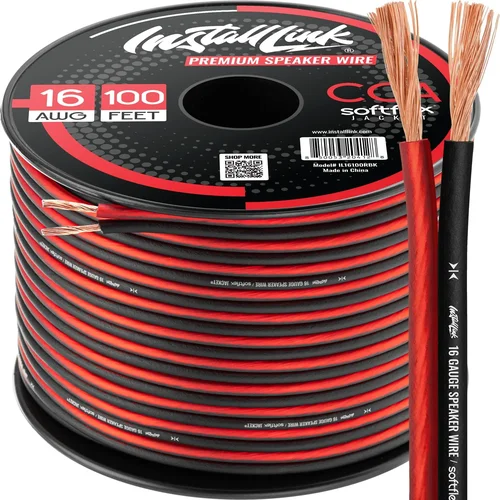
The most important factor in speaker cable selection is the gauge, measured in American Wire Gauge (AWG). Lower AWG numbers mean thicker wire—for example, 12 AWG is thicker than 16 AWG. Thicker cables have lower electrical resistance, which is crucial for maintaining signal strength over long distances or when driving low-impedance speakers. For most home audio systems with runs under 25 feet and standard 6- or 8-ohm speakers, 14 AWG or 16 AWG is sufficient. However, if you have a powerful amplifier, long cable runs (over 50 feet), or 4-ohm speakers, stepping up to 12 AWG or even 10 AWG can reduce resistance and improve damping factor, resulting in tighter bass and better overall control.
2. Conductor Material
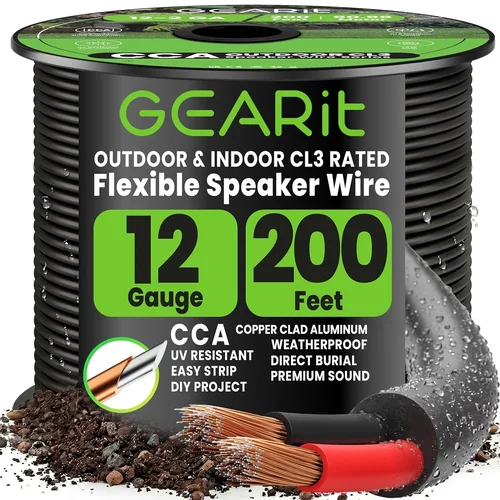
The material used in the cable’s conductors directly affects conductivity and signal clarity. Copper is the most common and cost-effective choice, with oxygen-free copper (OFC) being the preferred grade due to its higher purity and reduced impurities that can cause signal degradation. Some premium cables use silver-plated copper, which offers slightly better conductivity than pure copper, though the audible benefits are often debated. Avoid cables made from aluminum or copper-clad aluminum (CCA), as they have significantly higher resistance and are prone to oxidation, leading to poor performance and potential connection issues over time.
3. Cable Length and Run Distance
The length of your cable run plays a major role in determining the appropriate gauge. Longer runs increase resistance, which can lead to power loss and reduced damping factor—especially with low-impedance speakers. As a rule of thumb, for runs under 25 feet, 16 AWG is fine for 8-ohm speakers. For 25–50 feet, consider 14 AWG, and for runs over 50 feet or with 4-ohm speakers, 12 AWG is recommended. Always measure the actual distance from your amplifier to the farthest speaker and add a few extra feet for slack and routing flexibility.
4. Insulation and Jacket Quality
Good insulation protects the conductors from physical damage, moisture, and electromagnetic interference (EMI). Look for cables with durable, flexible jackets made from materials like PVC, TPE, or polyethylene. Thicker insulation also helps prevent signal leakage and crosstalk in bundled cable runs. Some high-end cables feature dual-layer shielding or braided jackets for added protection, though this is more relevant in professional or noisy environments than in typical home setups.
5. Connector Type and Termination
The connectors at the ends of your cables—banana plugs, spade connectors, or bare wire—affect ease of installation and long-term reliability. Banana plugs offer a secure, tool-free connection and are ideal for frequent changes. Spade connectors provide a tight, vibration-resistant fit, especially useful in high-power systems. Bare wire is the most economical but can loosen over time. Gold-plated connectors resist corrosion and ensure consistent contact, though the audible benefit is minimal compared to proper gauge and material selection.
6. Impedance Matching and Amplifier Power
Your amplifier’s power output and the speaker’s impedance (measured in ohms) should guide your cable choice. High-power amplifiers (over 100 watts per channel) driving 4-ohm speakers demand lower-resistance cables to prevent voltage drop and overheating. In such cases, 12 AWG or thicker is advisable. Conversely, low-power systems (under 50 watts) with 8-ohm speakers can perform well with 16 AWG cables. Always check your amplifier and speaker specifications to ensure compatibility.
7. Flexibility and Ease of Installation
Thicker cables (like 10 AWG) are stiffer and harder to route through walls, under carpets, or around furniture. If you’re running cables through tight spaces or need frequent repositioning, consider a balance between gauge and flexibility. Some manufacturers offer stranded conductors instead of solid core, which improves bendability without sacrificing conductivity. For in-wall installations, look for CL2 or CL3-rated cables that meet fire safety standards.
8. Brand Reputation and Warranty
While price isn’t always an indicator of quality, reputable brands like AudioQuest, Monoprice, Monster Cable, and Blue Jeans Cable are known for consistent manufacturing and honest specifications. Avoid no-name brands that exaggerate claims like “zero resistance” or “quantum tunneling.” A good warranty (typically 1–5 years) reflects the manufacturer’s confidence in their product. Also, check if the company offers a satisfaction guarantee or return policy, especially when buying online.
Different Types of Loudspeaker Cables

Common Buying Mistakes to Avoid
❌ Mistake: Choosing Cable Based Solely on Price
Why it’s bad: Extremely cheap cables often use inferior materials like CCA, which increase resistance and can degrade over time. Conversely, overspending on exotic cables with minimal real-world benefit wastes money without improving sound.
What to do instead: Focus on matching gauge and material to your system’s needs. A well-made 14 AWG OFC cable often outperforms a poorly constructed “premium” brand.
❌ Mistake: Ignoring Cable Length
Why it’s bad: Using a thin 16 AWG cable for a 60-foot run can result in significant power loss, especially with 4-ohm speakers. This leads to weak bass, reduced dynamics, and potential amplifier strain.
What to do instead: Always calculate your run length and choose a gauge that keeps resistance below 5% of the speaker’s impedance.
❌ Mistake: Believing in “Directional” Cables
Why it’s bad: Some manufacturers claim their cables are “directional” and must be installed a certain way. While electrons do flow in one direction, the effect is negligible in speaker cables, and there’s no scientific evidence supporting audible differences.
What to do instead: Save your money and focus on proper gauge and secure connections.
❌ Mistake: Overlooking Connector Quality
Why it’s bad: Loose or corroded connectors can cause intermittent sound, hum, or even damage to your amplifier. Bare wire connections can fray or oxidize over time.
What to do instead: Use gold-plated banana or spade connectors for reliable, long-lasting connections.
❌ Mistake: Buying Pre-Cut Cables Without Measuring
Why it’s bad: Pre-cut cables may be too short or too long, leading to awkward routing or wasted money.
What to do instead: Measure your setup carefully and buy bulk cable with connectors you can install yourself, or choose custom-length options from reputable sellers.
❌ Mistake: Assuming Thicker Is Always Better
Why it’s bad: While thicker cables reduce resistance, going from 12 AWG to 10 AWG in a 15-foot run offers negligible benefit and adds cost and stiffness.
What to do instead: Use a cable gauge calculator or follow standard guidelines based on length and impedance.
❌ Mistake: Neglecting In-Wall Safety Ratings
Why it’s bad: Using non-rated cable inside walls can pose a fire hazard and violate building codes.
What to do instead: For in-wall installations, always use CL2 or CL3-rated cables designed for safety and durability.
Budget Guidelines: How Much Should You Spend?
– Entry-Level ($10–$30 per 50ft): Ideal for casual listeners with short runs and 8-ohm speakers. Look for 16 AWG copper cables from trusted brands like Monoprice or AmazonBasics. Expect basic insulation and bare wire or simple connectors.
– Mid-Range ($30–$80 per 50ft): The sweet spot for most home audio enthusiasts. 14 AWG oxygen-free copper cables offer excellent performance for longer runs and higher power systems. Brands like Blue Jeans Cable and AudioQuest entry-level lines fit here.
– Premium ($80–$200 per 50ft): For serious audiophiles and high-power setups. Features include 12 AWG OFC, silver-plated conductors, and premium connectors. These cables minimize resistance and offer superior build quality.
– Luxury ($200+ per 50ft): Reserved for collectors and professionals. Includes exotic materials, hand-soldered terminations, and proprietary designs. While build quality is top-tier, the audible gains over mid-range cables are often minimal and subjective.
Expert Tips for Getting the Best Deal
– Buy in Bulk: Purchasing 50 or 100 feet of cable and terminating it yourself saves money and allows custom lengths.
– Shop During Sales: Black Friday, Prime Day, and end-of-year audio sales often feature discounts on reputable cable brands.
– Check Return Policies: Some retailers offer 30-day returns, letting you test cables in your system risk-free.
– Read Real User Reviews: Look for feedback on durability, sound quality, and value—avoid reviews that sound overly promotional.
– Compare Resistance Ratings: Use online calculators to compare cable resistance based on gauge, length, and material.
– Consider DIY Termination: Banana plugs and spade connectors are inexpensive and easy to install with basic tools.
– Avoid “Audiophile” Marketing Hype: Terms like “quantum,” “zero capacitance,” or “time-aligned” are often meaningless. Stick to measurable specs.
– Test Before Committing: If possible, borrow or rent different cables to compare in your own system.

Frequently Asked Questions
Q: Does speaker cable gauge really affect sound quality?
A: Yes, but only when resistance becomes significant. For short runs with 8-ohm speakers, 16 AWG is fine. For long runs or 4-ohm speakers, thicker cables (12–14 AWG) reduce power loss and improve damping, leading to tighter bass and better control.
Q: Can I use lamp cord or electrical wire as speaker cable?
A: Technically yes, but it’s not recommended. Lamp cord often lacks proper insulation, shielding, and conductor quality. It may also not meet safety codes for in-wall use. Always use cable designed for audio applications.
Q: Is silver better than copper for speaker cables?
A: Silver has slightly higher conductivity, but the difference is minimal and often offset by higher cost and lower durability. Copper, especially OFC, is the standard for good reason—it’s reliable, affordable, and performs excellently.
Q: Do I need different cables for bi-wiring?
A: Bi-wiring requires two separate cables per speaker, connected to the high and low-frequency binding posts. Use the same gauge and quality as you would for single wiring—consistency is key.
Q: How do I know if my cable is too thin?
A: Signs include weak bass, distortion at high volumes, or your amplifier running hotter than usual. Use a multimeter to measure resistance, or follow the 5% rule: total cable resistance should be less than 5% of the speaker’s impedance.
Q: Can I run speaker cables next to power cords?
A: It’s best to avoid parallel runs with power cables, as this can induce hum or interference. If crossing is necessary, do so at 90 degrees to minimize coupling.
Q: Are wireless speakers a better option?
A: Wireless speakers eliminate cable concerns but introduce latency, compression, and potential interference. For critical listening, wired connections with proper cables remain superior.
Q: How long do speaker cables last?
A: With proper care, high-quality cables can last decades. Avoid kinking, excessive bending, or exposure to moisture. Replace if connectors corrode or insulation cracks.
Our Final Recommendations
– Best for Budget-Conscious Buyers: Monoprice 16 AWG CL2 In-Wall Speaker Wire – Affordable, reliable, and safe for in-wall use.
– Best Overall Value: Blue Jeans Cable LC-1 14 AWG OFC – Excellent build quality, low resistance, and honest specs at a fair price.
– Best Premium Option: AudioQuest Type 4 12 AWG – High-purity copper, durable construction, and ideal for long runs or high-power systems.
– Best for Beginners: AmazonBasics 16 AWG with Banana Plugs – Easy to install, plug-and-play, and great for entry-level systems.
– Best for Advanced Users: Kimber Kable 8VS – Handcrafted, flexible, and optimized for high-resolution audio, though at a premium price.
Conclusion: Making the Right Choice
Choosing the right loudspeaker cable gauge isn’t about chasing the most expensive option or falling for marketing gimmicks—it’s about understanding your system’s needs and making a practical, informed decision. Focus on matching cable gauge to your amplifier power, speaker impedance, and run length. Prioritize oxygen-free copper, proper insulation, and reliable connectors. Avoid common mistakes like overspending on exotic materials or undersizing for long runs.
Remember, the goal is to preserve the signal from your amplifier to your speakers with minimal loss and maximum reliability. For most users, a well-constructed 14 AWG cable strikes the perfect balance between performance, flexibility, and cost. By following the guidelines in this guide, you’ll ensure your audio system delivers the clarity, dynamics, and immersion it’s capable of—without wasting money on unnecessary upgrades.
Take the time to measure your setup, read reviews, and consider your long-term needs. Whether you’re building a new system or upgrading existing components, the right loudspeaker cable is a small investment that pays big dividends in sound quality and peace of mind.